PhD: knowledge sharing for climate resilience among African farmers
Apply for a PhD to join the NISD, developing a knowledge-sharing platform to support the climate resilience of African farmers.
PhD Application deadline: 6 November 2023 | Start date: 1 February 2024
Partners: UEA School of Global Development | Supervisor: Prof Arjan Verschoor
The need
Climate change brings unprecedented risks for African farmers. Climate change threatens African smallholder livelihoods. Risks include: droughts and floods, greater rainfall unpredictability, new plant and livestock pests and diseases. These risks can cause devastating shocks to livelihoods and food security. We must build resilience with African farmers to face these threats.
Knowledge sharing is central in climate resilience. UEA researchers are building a knowledge sharing platform for farmer resilience. The platform takes real-time risk information and advises farmers of how to protect themselves. Farmers feedback into the platform to refine risk knowledge and improve mitigation advice.
Village agents are at the heart of the knowledge-sharing platform. Village agents work with farmers to develop equitable knowledge-sharing. These agents use a smartphone app to share climate forecasting, weather insurance, input advice and guidance for climate-smart farming.
Research project
Your PhD will help build the knowledge-sharing platform. Based in the foothills of Mount Elgon in eastern Uganda, you will:
- Digest meteorological information for assisting farmers and improving weather insurance.
- Identify agricultural inputs suitable for changing growing conditions.
- Test farmers’ preferences for features of the knowledge-sharing platform.
- Help pilot, implement and evaluate promising design features.
The research in Uganda will be crucial for rolling out the platform across sub-Saharan Africa. You will be part of a close-knit team consisting of specialists from academia and beyond. Beyond general research skills training, you will receive tailor-made training in your supervisors’ areas of expertise: applied meteorology, smallholders’ decision making under risk, choice experiments and impact evaluation.
Ideal PhD candidate
The ideal candidate is somebody who would relish the challenge of combining meteorology, development economics and impact evaluation in a transdisciplinary research project. A good master’s degree in one of these disciplines is required, as well as strong demonstrated research potential.
This project has been shortlisted for funding by the Critical Decade for Climate Change programme. You can find more information about the programme and details of how to apply on our website.
Entry Requirements
Acceptable first degree in Environmental Sciences, Meteorology, Development Studies, Economics, and related subjects. The standard minimum entry requirement is 2:1 in a Bachelor’s degree and a Master’s degree in a relevant field of study.
Funding
Successful candidates will be awarded a 3 year, 8 month studentship covering tuition fees, a maintenance stipend (£18,622 per year in 2023/24) and funds to support the research project and associated training.
Applications are only open candidates who qualify for UK tuition fees.
Part-time studentship awards are subject to approval.
You can find further details of the Critical Decade Programme here.
Further reading
Osborne, M., Lambe, F., Ran, Y., Dehmel, N., Tabacco, G. A., Balungira, J., Perez-Viana, B., Widmark, E., Holmlid, S., & Verschoor, A. (2022). Designing development interventions: The application of service design and discrete choice experiments in complex settings. World Development, 158, [105998]. https://doi.org/10.1016/j.worlddev.2022.105998
Dehmel, N., Ran, Y., Osborne, M., Verschoor, A., Lambe, F., Balungira, J., Tabacco, G., Perez-Viana, B., Widmark, E., & Holmlid, S. (2021). Combining service design and discrete choice experiments for intervention design: An application to weather index insurance. MethodsX, 8, [101513]. https://doi.org/10.1016/j.mex.2021.101513
Verschoor, A., & D’Exelle, B. (2022). Probability weighting for losses and for gains among smallholder farmers in Uganda. Theory and Decision, 92, 223-258. https://doi.org/10.1007/s11238-020-09796-8
Qiao, L., Wang, X., Smith, P., Fan, J., Lu, Y., Emmett, B., Li, R., Dorling, S., Chen, H., Liu, S., Benton, T. G., Wang, Y., Ma, Y., Jiang, R., Zhang, F., Piao, S., Müller, C., Yang, H., Hao, Y., … Fan, M. (2022). Soil quality both increases crop production and improves resilience to climate change. Nature Climate Change, 12(6), 574–580. https://doi.org/10.1038/s41558-022-01376-8
Duvendack, M., & Mader, P. (2020). Impact of Financial Inclusion in Low- and Middle-Income Countries: A Systematic Review of Reviews. Journal of Economic Surveys, 34(3), 594-629. https://doi.org/10.1111/joes.12367
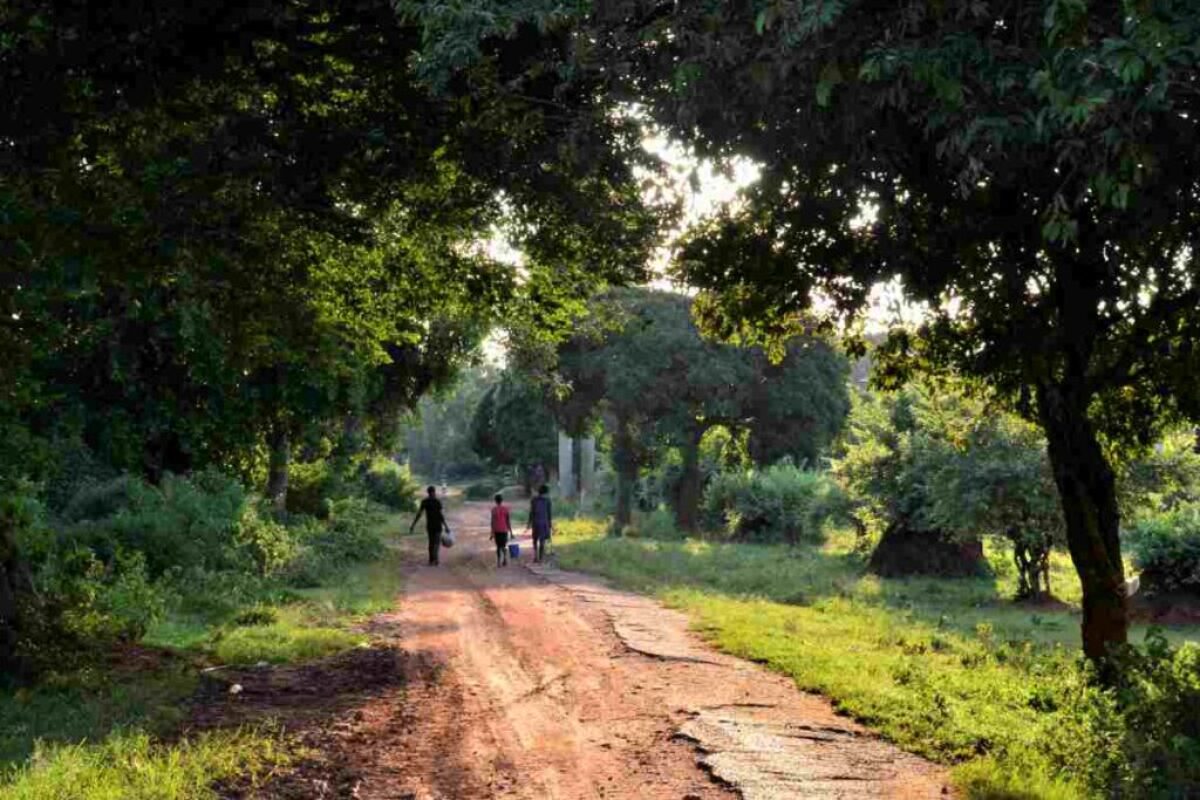
Featured photo by Benjamin Rukundo on Unsplash
Share this opportunity