NISD internship: Guiding how climate crop predictions can best inform local resilience strategies
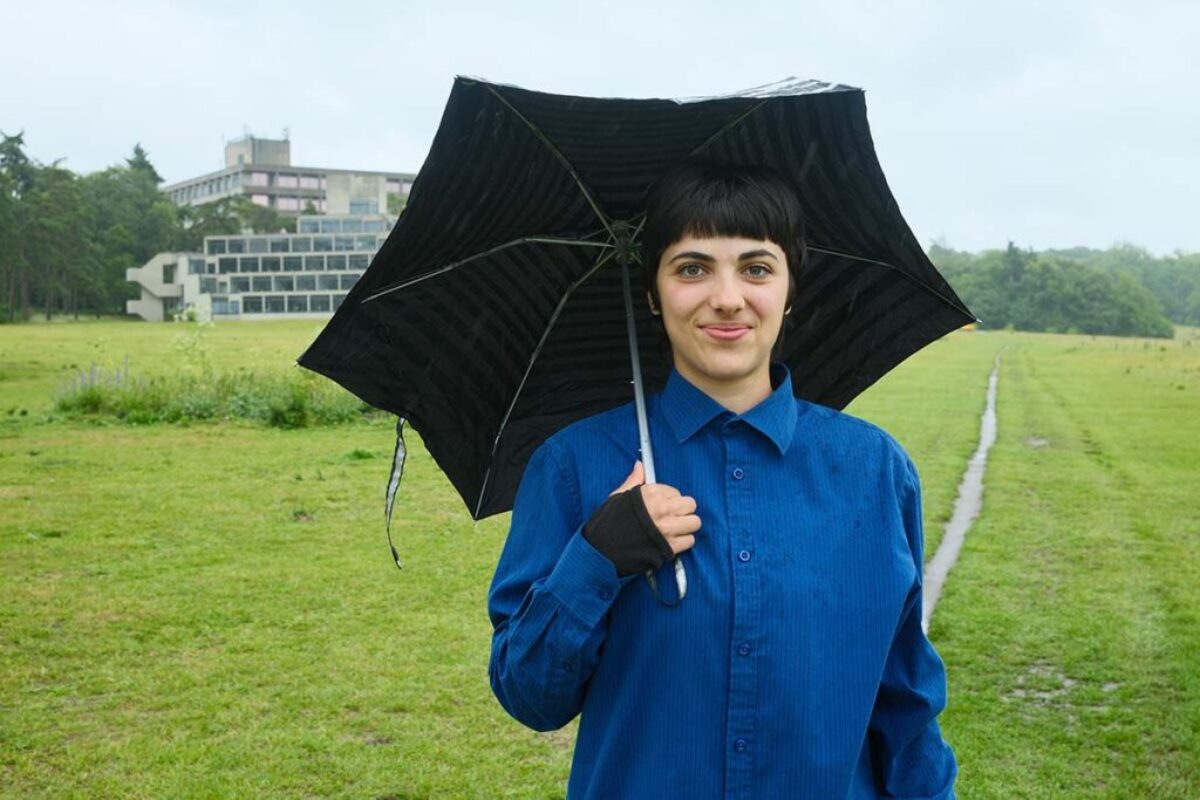
The NISD was delighted to welcome Anouk Grégoire-Sannazzaro to Norwich for a three month internship supporting the development of the BLACK SHEEP app – a tool to help communities plan their crop production despite changing climates. In this post, Anouk shares her journey to Norwich and her experience on the internship.
After a high school in Bordeaux with a specialisation in physics, mathematics and geopolitics, I came to Paris for a bilingual bachelor’s degree named ‘Sciences for a Sustainable World’ at the Paris Sciences & Letters (PSL) University. This new degree focuses taking an interdisciplinary approach to environmental research, with about 12 different disciplines per semester, ranging from oceanography, ecotoxicology and climate physics to sociology of environment, psychology of risks and natural resources economics.
During the third year, PSL offered me the opportunity to realise an Erasmus+ program for a 3-month period in order to realise a research internship on the topic of my choice. In this context, I found out about the Norwich Institute of Sustainable Development (NISD) and the ‘Critical Decade for Climate Change’ program proposed by the University of East Anglia (UEA), which supports transdisciplinary projects for fair and sustainable solutions to face the pressures of climate change. I reached out to NISD researchers Manasa Sharma, Arjan Verschoor and Peter Emmrich who are working on using climate modelling for agricultural resilience and they invited me to join the BLACK SHEEP’s project.
From mid-March to mid-June 2026, I worked at the NISD under the supervision of Arjan and in continuous discussion with Manasa. After learning the methodology, I used the BLACK SHEEP app to obtain recommendations for climate adaptation through two real-case examples: rice in the Kapilbastu district (Nepal) and wheat in Bahraich (India). I compared and completed the app’s outputs with the available literature on agriculture data and adaptation measures already adopted in the Western Teraï region. I also worked with the insights and feedback collected by Arjan during consultations with local stakeholders in India and Nepal, analysing how they can be combined with climate models and crop growing requirements to inform the design of BLACK SHEEP.
Following Manasa’s advice, I used the MoSCoW framework – a helpful method of organising the project’s requirements – to provide a first useful ‘assessment’ of the app, highlighting the core limitations and the current priorities to efficiently achieve the objectives. This assessment found that combining suitability of crop requirements with future climate is promising, and would be most effective when using a participatory approach to integrate local knowledge with the tool’s recommendations. These collaborative and collective aspects are the main strengths of the app, improving its effectiveness for researchers, farmers, agricultural officers and policy makers alike.
I presented all my findings in a 30-page report and an oral presentation to the NISD. At the end, I recommended careful consideration of the climate models variability and the averages in crop parameters. These predictions should be combined with robust on-field tests validated by the different stakeholders and local communities. Moreover, economic information on market prices and opportunities, insurances and government support will make the app’s agronomic advice directly actionable for users.
My experience at the UEA was extremely enriching and in line with my background and personal interests. The NISD team was particularly welcoming, enabling me to be fully involved in the project and work closely with its members in a very pleasant atmosphere. The Norwich environment was also very much appreciable during this period.