Developing gender-inclusive and user-centred digital agricultural extension services: a dissertation experience
Background
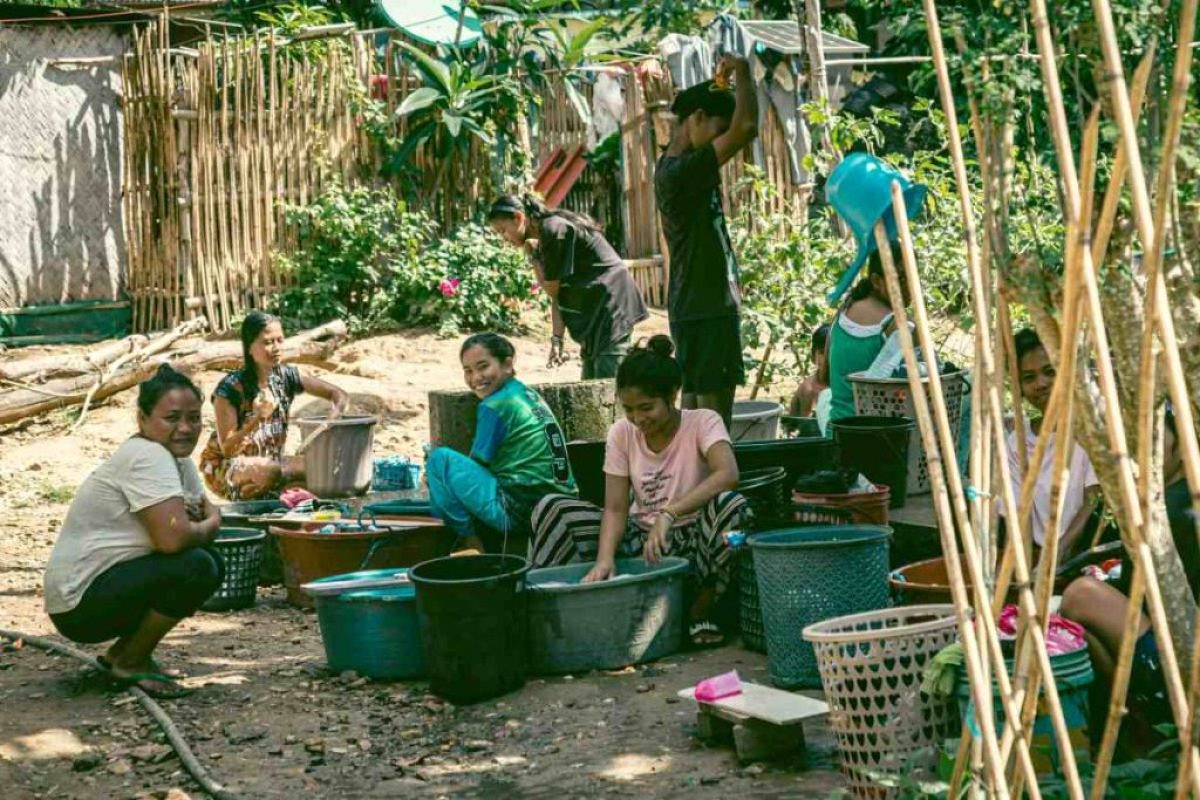
My very first field-based assignment was as a community organizer in an agricultural community in the Philippines. This was in the 1990s, when coordination with government agencies required personally visiting the offices to arrange on-site visits by their technicians to address farmers’ extension needs. The farmers’ association I supported was composed entirely of men, not due to the formal policy of the organisation, but because women were expected to be homemakers, despite their active involvement in farming activities such as planting, weeding, harvesting, corn shelling, and marketing.
Many years later, after taking on diverse roles across the development sector, I pursued my second master’s degree in Global Social Development at the University of East Anglia in 2024. At the end of the first term, I submitted my letter of interest to undertake a research internship at the Norwich Institute for Sustainable Development (NISD) as part of my dissertation work.
I’ve focused my research on how digital agricultural services for smallholder farmers in the Global South can be designed as gender-inclusive and user-centred. With this, I’ve used systematic review to identify and synthesise relevant evidence for my research questions.
Findings
My study revealed that, across diverse contexts, the design of effective digital agricultural extension services requires far more than user-friendly tools. It demands deliberate attention to structural gender inequalities, persistent barriers to access, and institutional constraints. The insights gained from the study reframed “design” as a system-wide process, but one that is inherently social and political, and not merely participatory in nature.
At the foundation of this system lies strong institutional and policy support. This includes integrating digital solutions into existing extension systems so they are not siloed or treated as standalone interventions. Policy alignment and sustained institutional support provide the regulatory and strategic framework necessary for inclusive initiatives. Also important is the provision of enabling infrastructure, such as reliable connectivity and access to digital devices, which remain significant challenges in many rural and underserved areas.
I was able to identify three key domains where inclusive design and delivery must be actively pursued. These are gender-responsive participation, equitable access to digital and extension services, and context-sensitive innovation.
Just like my fieldwork experience shows, women are still not receiving the due recognition they deserve in farming activities to this day. So too often, women are either excluded from digital initiatives or involved in superficial ways that fail to account for their specific needs and constraints as farmers. Women often face a “triple disadvantage” in accessing digital agricultural services: less access to devices, more limited time, and lower digital literacy. To overcome this, the evidence suggests that gender-inclusive design requires intentional strategies to adapt to women’s contexts and calls for the meaningful inclusion of women not just as end-users, but as co-creators.
Moreover, equitable access to digital and extension services challenges the assumption that more advanced technology is inherently better. Instead, it advocates for usability over complexity, highlighting the importance of tools that are simple, intuitive, and culturally relevant with the use of low-tech and multilingual approaches and local languages. Doing so broadens access, particularly for users with limited literacy or technical experience, by meeting people where they are, rather than expecting them to adapt to rigid, high-tech systems.
Participatory and context-sensitive innovation involves co-designing with users, conducting iterative testing, and integrating feedback loops that ensure tools evolve in response to user experience. Innovation becomes a collaborative and adaptive process where solutions are tailored to local realities.
Finally, evidence from the systematic review shows that M&E is a cross-cutting mechanism that supports the entire digital agricultural extension service ecosystem, not only for iterative improvement of digital tools after deployment. This ensures tools are designed inclusively, access barriers are tracked and addressed, institutional systems are responsive, and adoption outcomes are measurable. This process enables practitioners to adjust their strategies in real-time based on data and feedback from the field.
Conclusion
In summary, the study argues that for digital agriculture to contribute meaningfully to rural transformation, it must move beyond one-size-fits-all models. Instead, it should be grounded in the lived experiences of diverse users, supported by participatory structures, and guided by a strong commitment to digital equity.
I have since received the final grade for my dissertation. Now I see agricultural extension in a different light. The twenty-first century offers significant opportunities to improve agricultural extension services, particularly through digitalisation. The goal is not to rescind these changes but to embrace them through thoughtful and appropriate designs.
You can read the full dissertation here.
Author

Lea Fenix-Cea
Share this article
Follow us