New report highlights priorities to bring improved grass pea to farmers
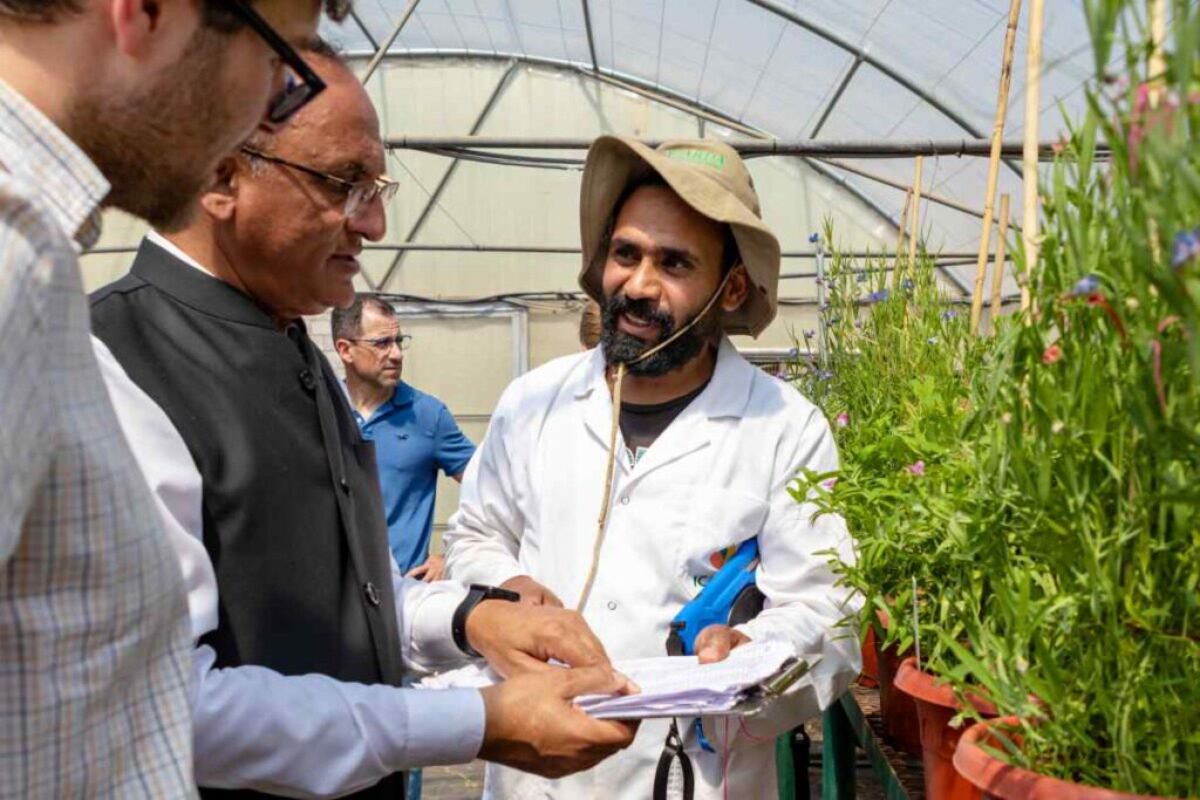
Grass pea is a nutritious crop with great potential for climate-smart and regenerative agriculture. Grass pea has however seen limited modern breeding improvements to date, preventing the crop from achieving the potential many believe it to have. A new NISD report shares how researchers see the current breeding situation for the crop, and what is needed for it to achieve its potential.
There has been a rise in grass pea research in recent years, and these advancements have produced useful pre-breeding tools. More however needs to be done to unite the growing community to achieve impact.
We share a summary of some of the report below. The findings of this report are particularly timely ahead of the first International Lathyrus Day meeting on the 23rd of June, 2024.
A snapshot of grass pea uses and research
Grass pea cultivation is increasing across Ethiopia and South Asia. This cultivation is expected to rise with climate change, as other legumes struggle with changing extremes in weather.
It is difficult to estimate exact figures of grass pea harvests, as its history as an underutilised crop means it is either left out of official reporting or included with other indigenous legumes. Rising estimates among field researchers however show the growing demand for grass pea, and the need for improvement.
There is the potential for greater grass pea cultivation in Europe. The crop has long been grown across the continent, but traditionally in smaller quantities. More recently however, there is suggestion that the crop could be used for alternative protein production, as a more sustainable animal fodder than imported soy, and as a cover crop for regenerative agriculture.
Alongside rising cultivation, there has been a recent increase in research attention on grass pea. Examples include the publication of the genome earlier this year and the development of new genetic resources for pre-breeding. Finally, the International Center for Agricultural Research in the Dry Areas (ICARDA) is continuing to develop methods to improve access to their genebank, which hosts the largest collection of grass pea accessions globally.
Next steps for grass pea research
There are three main priority areas to focus on to accelerate the delivery of improved grass pea to farmers fields. The first of these is to build on current pre-breeding resources, and make these toolkits accessible to the wider research community.
Grass pea currently has few genetic markers for breeders to use, but these are being developed by the James Hutton Institute (JHI), in collaboration with the John Innes Centre (JIC) and ICARDA.
Drawing on these range of tools from JIC, JHI and ICARDA, offers the chance for breeders worldwide to rapidly accelerate grass pea breeding programmes. What is needed now is to build awareness for how to access these tools and continue to develop resources that are suited to breeders’ needs.
Another priority area is to develop greater links between grass pea researchers and farmers. This includes understanding the range of needs that grass pea farmers might have across food, fodder and regenerative agricultural dimensions. These findings can feed into pathway to impact planning, to ensure that improved grass pea varieties reach farmers’ fields.
Finally, there is a need to strengthen connections around grass pea research. This includes building greater communication between community members, as well as outside of grass pea research. grasspea.net offers a central portal for community posts, but many community members would like to meet in person. The new meeting for the first International Lathyrus Day, organised by the Lambein Fund, offers such an opportunity.
Read the report
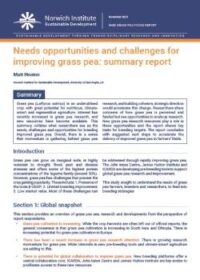
Needs opportunities and challenges for improving grass pea: summary report
Interest has recently increased in grass pea research, and new resources have become available. This summary collates what researchers see as the needs, challenges and opportunities for breeding improved grass pea. The report concludes with suggested next steps to accelerate the delivery of improved grass pea in farmers’ fields.
Share this article