Fieldwork Reflections from Coastal Kenya: Marine Fisheries and Mariculture-based Livelihoods and Integrated Multitrophic Aquaculture (IMTA) for Sustainability
Lucy Njogu, 10 June 2024.
Improving livelihoods in low-income rural communities is a long-term endeavour that demands deep understanding and continuous assessment. I am an NISD doctoral researcher, currently doing my fieldwork. While exploring pathways to enhance the resilience of aquatic food system actors in coastal Kenya, through conversations with actors in the value chain over the month of May, three important realities were uncovered:
1. The dwindling catch and local fish supply that does not meet demand.
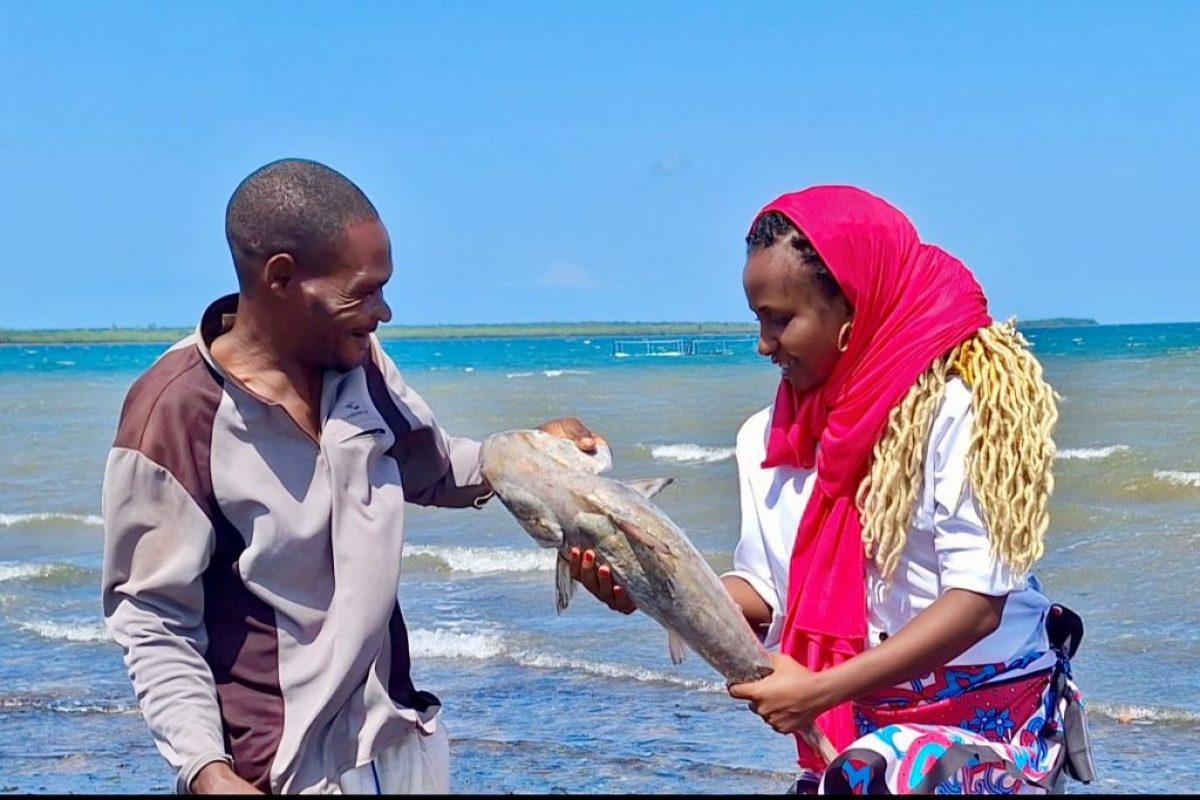
During my interactions with key informants, small scale fish traders and fishermen, the reality of reduced catches was ascertained. One of the major problems commonly reported among the fishermen in Kenya is the inadequate and dwindling fish catch, especially in the inshore fishing areas. Compounded by lack of appropriate gears for deep sea fishing and unprecedented risks such as cyclones, the challenge trickles down to the traders. The small-scale traders, also referred to as “mama karanga” and mostly women, asserted the consequences of the inadequate catch to their livelihoods and well-being. Though the demand for fish is high, especially in coastal Kenya, Mama Karangas’ trade is often negatively affected by the inadequate catch. In addition to a hand to mouth poverty loop, the mama karangas related the ‘sex for fish’ phenomenon, a term that refers to female traders engaging in transactional sexual relationships with fishermen in order to get hold of fish. As indicated in literature, the existing catch from capture fisheries and semi-intensive pond-based fish production systems in Kenya has not been able to meet the demand for fish. To bridge the large gap between supply and consumption demand, Kenya resorts to importing fish.
- Mariculture is a promising solution for closing the fish supply-demand gap and uplifting rural coastal communities.
As the fastest growing food system in the world, aquaculture is expected to be essential for bridging this gap. According to the IPCC Special Report on the Ocean and Cryosphere in a Changing Climate (SROCC), climate change effects have already contributed to reduced fisheries catches. With an increasing population, fish demand outstripping supply is thus expected to continue, but with the intensified efforts to increase fresh water and marine aquaculture production, this gap maybe significantly bridged. Mariculture, a form of aquaculture that involves the production of marine organisms in their natural environment or one that closely resembles it, is particularly promising.
In Kenya, mariculture was introduced in the 1980s, and is slowly picking up the pace. With renewed efforts by the government, and local and international NGOs, the sector has registered improvements and is showing signs of positively impacting the livelihoods and well-being of coastal communities. The Kenya Marine and Fisheries Research Institute (KMFRI), a state corporation, has instigated much of this through well-received mariculture projects. The powerful statement below from a member of a community that benefited from such a project points to the transformation of wellbeing that is achievable through mariculture: “Nashukuru sana kwa mashirika ya utafiti kama KMFRI, sababu toka watuletee mambo ya mwani, maisha ya hii jamii yetu yamebadilika sana. Mwanzo hapa kwetu hungeona nyumba zote za bricks, sasa angalia, ile ni kwa mwani, na ile pia.” This is translated as “I am grateful to research institutions like KMFRI because since they brought us the project over 10 years ago, our lives have changed significantly. A few years ago, there were no stone brick houses. Now see, that one [points to a house] is because of seaweed farming, and that one too.”
- Significant progress still needs to be made in improving the livelihoods of coastal communities through mariculture and conserving marine resources.
Just as Rome wasn’t built in a day, the journey of livelihood transformation requires patience and perseverance, by both the community members and development and research practitioners. Each effort, each initiative, is like laying a marble in a grand and vibrant mosaic of progress. It’s through these collective endeavours that the impact of research and development initiatives takes root, weaving a flourishing tapestry of positive change.
And yes, there are opportunities for sustainable mariculture!
Though there is no magic bullet for sustainability, various strategies can be leveraged to achieve significant progress in aquaculture, including in mariculture. One effective approach is Integrated Multi-Trophic Aquaculture (IMTA) in which species from different trophic levels are cultivated close together, allowing the byproducts of one species to be reused as nutrients for other species. For instance, fed species like finfish or shrimp are cultured alongside organic extractive species such as shellfish or herbivorous fish, as well as inorganic extractive species like seaweed. The waste produced by the primary species (fish or shrimp) releases nutrients into the water, primarily in the form of ammonia, nitrates, and organic matter. The IMTA approach aims to create a balanced ecosystem that mimics natural food webs, enhancing environmental sustainability, and improving resource efficiency.
The benefits of IMTA include waste mitigation through recycling nutrients within the system, hence reducing the environmental impact of aquaculture operations, such as water pollution and eutrophication (the excessive enrichment of water with nutrients leading to harmful algal blooms and the killing of other organisms such as fish). In addition, IMTA promotes resource efficiency since by integrating multiple species a better use is made of feed inputs, as different organisms utilize different types of waste or nutrients. IMTA also promotes economic benefits while at the same time acting as a risk management strategy for the farm. Farmers can benefit economically by producing and selling multiple products (e.g., fish, seaweed, shellfish), reducing economic risk that results from reliance on fewer income streams.
IMTA has been adopted at commercial scales in countries such as China, Canada and the USA, among others. However, this is not the case for African countries notwithstanding the great promise that sustainable development of the general aquaculture sector holds for the Global South, and indeed for the world at large. However, organizations such as WorldFish are set to change this. Through a mega project – the Asia-Africa BlueTech Superhighway (AABS), WorldFish has ambitious plans for improving the livelihoods of the coastal communities in Asia and Africa, including Kenya, and through Integrated Multi-Trophic Aquaculture promote sustainable coastal and marine aquaculture.
Share this article