Trends-Trouble-Tenacity: The Food Security Picture for 2050
The mounting evidence is clear: global food systems are not on track to meet food and nutritional needs around the world by 2050. A convergence of factors including climate change, soil degradation and loss, water scarcity, conflict, trade restrictions, and underinvestment in agricultural research further worsens the situation of food insecurity. If left unaddressed, these factors risk creating a future we would not want to pass on to the next generation.
There are no magic solutions. But there are strategic, urgent, and essential actions we can take to counter these risks.
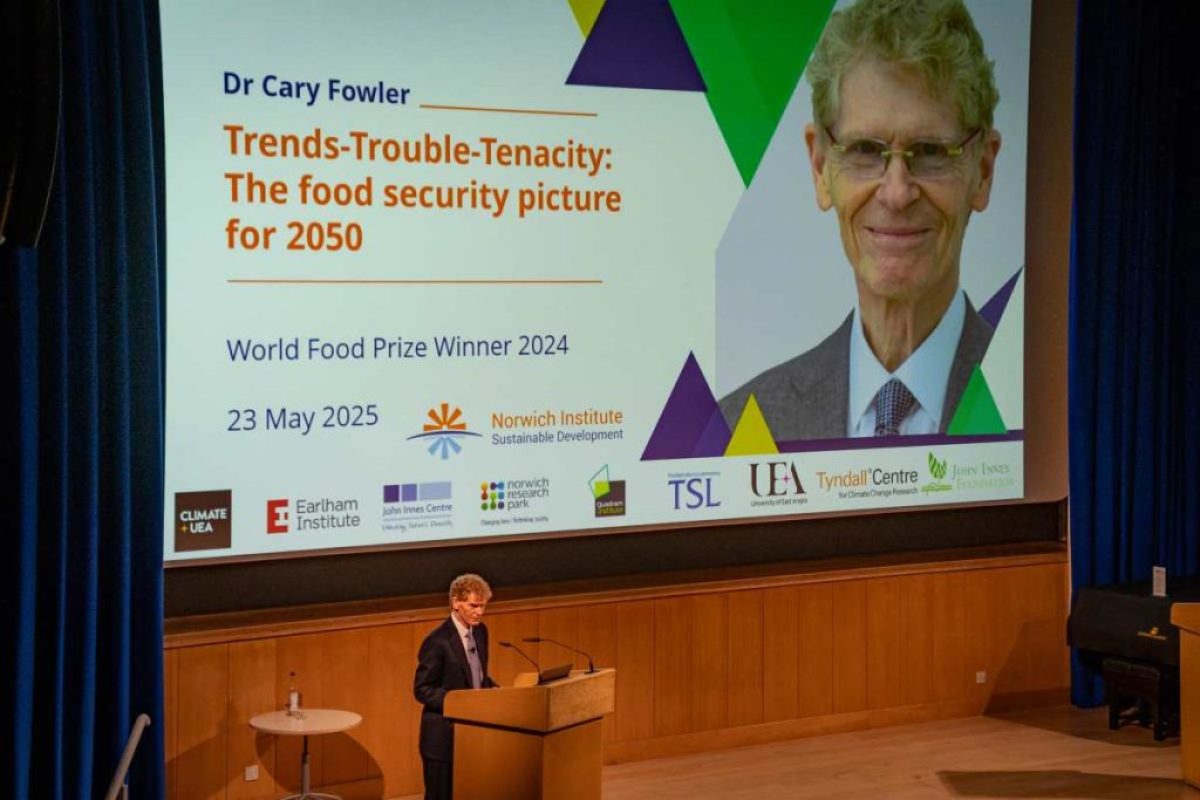
On May 23rd, Dr Cary Fowler, 2024 World Food Prize winner and former U.S. Special Envoy for Global Food Security, delivered the 2025 John Innes Foundation (JIF) Lecture to a packed auditorium of researchers. Held at the John Innes Conference Centre, his lecture titled “Trends – Trouble – Tenacity: The Food Security Picture for 2050” focused on examining the challenges of food security and outlined some of the most important responses we should be making.
The Current State of Food Security
Today, approximately 750 million people around the world are food insecure, three billion people cannot afford a healthy, balanced diet, and 60 million children under the age of five suffer physical and cognitive stunting due to malnutrition.
“We have a food security problem, and we also have a nutrition security problem. We ought to be talking more than we do about nutrition security, not just food security.”
Dr Cary Fowler
Six Major Challenges to Feeding the Future
Looking ahead to 2050, the world is falling short of meeting future food demand – whether sustainably nor unsustainably. Six major challenges, “headwinds”: additional climate challenges, soil degradation and loss, water limitations, conflict, trade restrictions, and inadequate investment in research and development are threatening global food security. April 2025, which was the second-hottest April ever recorded globally serves as a benchmark of what is to come.
“The best growing seasons of the future, will be as hot or hotter than the hottest seasons of the past.”
Dr Cary Fowler
According to African Union, 75% of Africa’s cropland is degraded, and up to half could become unusable by 2050. Water scarcity presents another major hurdle; agriculture accounts for 70% of global freshwater use, yet 21 of the world’s 37 major aquifers are currently being depleted.
Conflict is also another critical issue, war both causes and worsens food insecurity. Trade restrictions further compound the problem by preventing the global market from offsetting local production shortages.
There is much more need for agriculture research now than there was in the past. However, there is a stagnation or even decline in the support for agricultural research and basic sciences in developed countries.
The world has never had this list of challenges all coming together at once, but now we do. One of the things that makes it most difficult for societies to deal with these kinds of issues is that we are predisposed to focus on short-term issues rather than long-term threats, and causing us to fail to invest in solutions in good time.
Strategic Initiatives for the future
In October, the U.S. State Department convened a summit of Nobel laureates and World Food Prize winners. Together, they issued a compelling open letter titled “Hunger’s Tipping Point” emphasising the necessity and effectiveness of investments in agricultural research. The letter was endorsed by 128 Nobel laureates, 26 World Food Prize winners, and over 120 organisations.
“There is nothing more fundamental to agriculture than genetic diversity”
Dr Cary Fowler
Talking about African agriculture, it is crucial and important to restore soils in African as well as scale up the cultivation of underutilized crops (opportunity crops). These often-overlooked species could significantly improve nutrition, boost climate resilience, and strengthen food security across the continent. This is the focus of the Vision for Adapted Crops and Soils (VACS) initiative.
The Svalbard Global Seed Vault, which Dr Fowler helped establish in 2008, acts as a secure backup for the world’s plant genetic resources. Located on the island of Svalbard, far north in the Arctic circle, the Vault houses over 1.3 million seed samples from across the globe, safeguarding the raw material needed for future crop breeding. It protects against loss from war, disaster, and systemic failure.
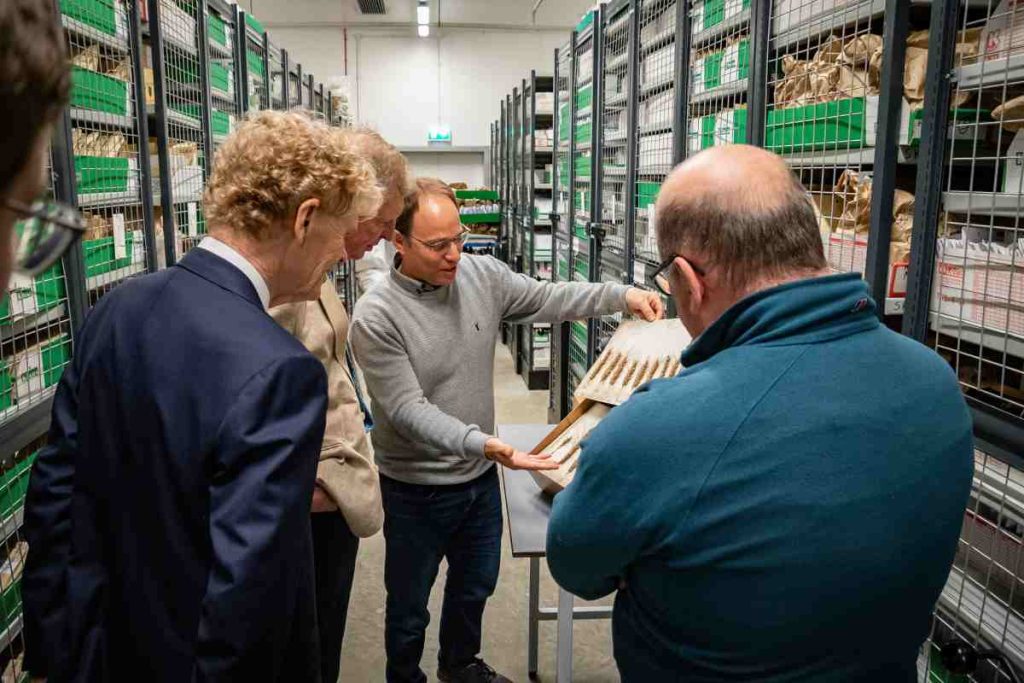
Images © Phil Robinson, John Innes Centre.
Author

Theresa Cassandra Saini
Share this article
Follow us