Informing climate adaptation across Nepal and India
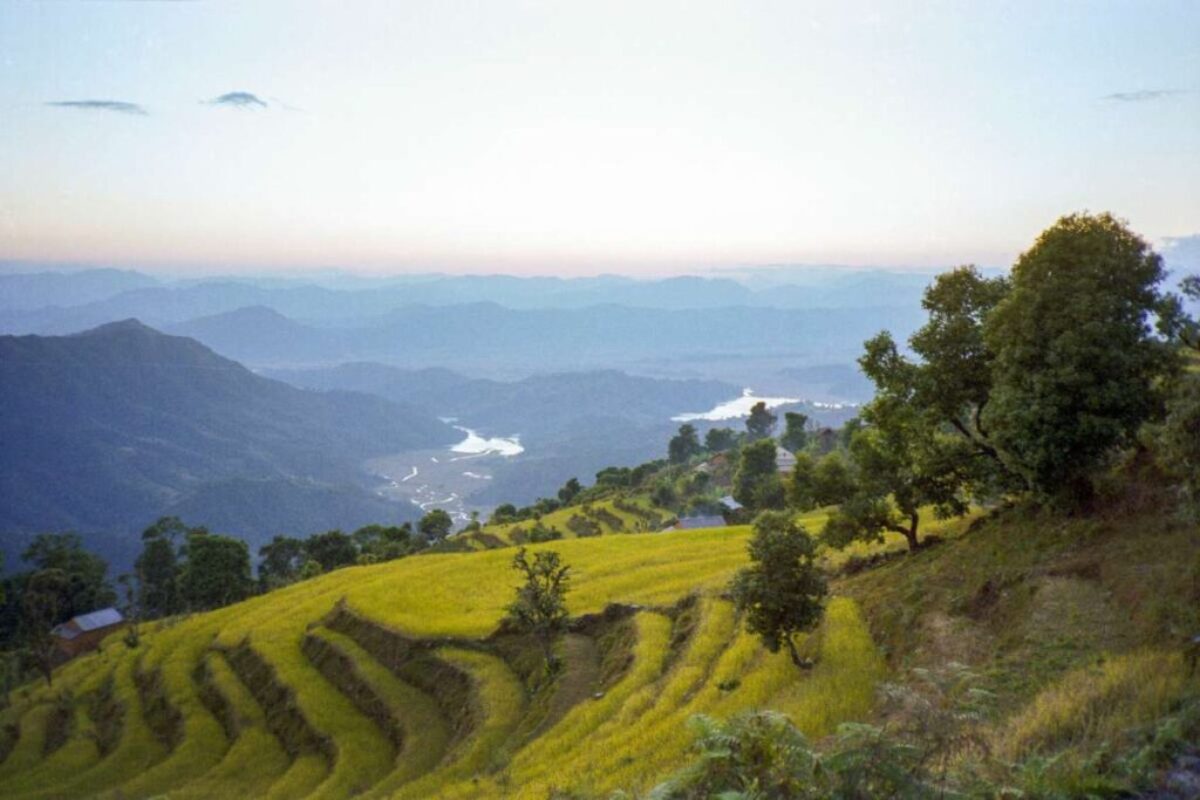
A new climate adaptation tool is helping researchers and policymakers across India and Nepal future-proof agriculture and agribusinesses against changing growing conditions and adapt to climate change. The tool, called BLACK SHEEP (Building Local Adaptation through Collaborative Knowledge Systems for Holistic Environmental & Economic Policy), was created by Manasa Sharma, a researcher affiliated with the Tyndall Centre for Climate Change Research and NISD. Ongoing NISD research is working to combine the findings from BLACK SHEEP with local socio-economic data to inform locally-optimised climate adaptation strategies.
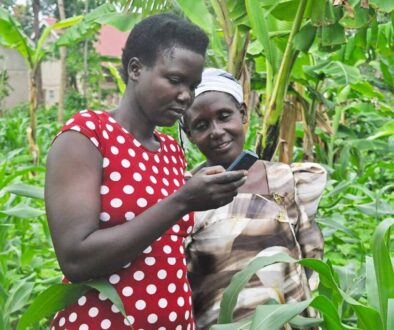
Changing climates are causing crop production areas to shift, affecting what is viable for farmers to grow. These shifts pose particular challenges where farmers heavily depend on certain crops that are becoming unsuitable for changing growing conditions. Researchers are increasingly producing models that can predict future growing conditions to guide future resilience building, but these models are rarely accessible to local agricultural extension workers who are helping farmers on the ground.
BLACK Sheep visualises current crop-growing areas across India and Nepal and models how future climate conditions will shift these zones. The app is currently being trialled across 12 cross-boundary districts in the Western Teraï region, providing critical visual data to guide NISD’s socio-economic research, ultimately helping regional researchers and policymakers.
“I had developed new data skills that I really wanted to put to good use by doing policy-relevant science within the scope of my thesis. There is an overwhelming amount of climate data available, but it often stays locked in academic databases. With BLACK SHEEP, the goal is simply to take that complex information and visualize it in a way that helps local researchers and policymakers understand climate futures, allowing them to make more informed choices about regional food security.”
Manasa started developing BLACK SHEEP in 2025. She was working with data from the FAO EcoCrop database combined with future climate projections, which offered vital insights into impending agricultural shifts but was difficult to communicate to broader audiences. Manasa realised that developing an app would provide a more efficient and accessible way to communicate the massive volume of crop suitability maps she was generating with fellow researchers.
The goal was to allow users to quickly visualise these shifting suitability maps across a wide variety of crops at once. This work ultimately developed into a web-app, BLACK SHEEP. BLACK SHEEP worked so effectively, Manasa and her supervisors realised it held promise for communicating these changes to support a broad range of stakeholders.
This research is co-produced by an interdisciplinary research team across the Norwich Research Park. Two of Manasa’s supervisors Prof Rachel Warren and Dr Jeff Price are based inthe Tyndall Centre for Climate Change Research at the University of East Anglia. Prof Warren has spent over two decades shaping global policy, notably serving as a lead author on multiple landmark IPCC reports evaluating global climate risks. Working alongside her, Dr Price leads major international initiatives mapping climate risks to biodiversity, providing critical framework support for modeling tools like BLACK SHEEP.
Prof Warren said, “we realised that Manasa had developed a groundbreaking tool for communicating complex science that informs climate change adaptation in agricultural systems in a simple way. We saw how valuable this could be to smallholder farmers who are in great need of advice as they become increasingly vulnerable to climate change and associated extreme weather events.”
Since the first prototype, Manasa has expanded BLACK SHEEP to include more crops and climate futures to help build detailed pictures to guide future crop planning under climate change. The app today now maps climatic feasibility for 540 crop species across 812 administrative districts in India and Nepal. It supports evidence-based agricultural climate adaptation planning across four interconnected modules: suitability mapping, planting calendar analysis, climate analog identification, and climate extremes.
A key feature of the app is its ability to identify crop-based climate analogs. Instead of directly comparing climatic conditions, BLACKSHEEP uses specific crop suitability scores to match the predicted future growing conditions of one location with an existing location somewhere else today for a user-selected crop basket.
For example, the tool might hypothetically project that future agricultural conditions in Norfolk, England will shift to resemble those found in Mediterranean regions today. This suggests that in the coming decades, farmers in Norfolk could potentially find success transitioning to crops traditionally grown in those climates, such as citrus fruits or durum wheat. Or the tool might predict that future agricultural conditions in parts of Nepal will shift to match the crop suitability scores found in warmer regions of India today. This suggests that in the coming decades, Nepalese farmers could use this data to proactively transition to heat-tolerant crops traditionally grown further south.
The app maps projections by leveraging extensive data from Ecocrop alongside climate models that simulate how temperatures and precipitation will change over time. To give users a highly accurate picture of future crop suitability, BLACK SHEEP processes this data through separate modes for rainfed and irrigated farming, while incorporating photoperiod data and optimised planting calendars.
A research team led by co-supervisor and NISD’s Prof Arjan Verschoor and collaborating scientists in India have since been traveling across 12 transboundary regions between Nepal and India to ground-truth the app’s estimates.
Prof Verschoor said, “We have now used BLACK SHEEP with farmers, district agricultural officers and agricultural extension workers across the transboundary zone linking eastern Uttar Pradesh in India and Lumbini Province in Nepal. What is so impressive is that the tool does not just show future growing conditions. It helps people think through what those changes mean for the crops they currently grow, which alternatives may become viable, and where they might look for practical lessons through climate analogues. That makes it a powerful climate resilience tool. It brings together modelled climate science, crop knowledge and the practical expertise of local farmers and agricultural officers in a genuinely transdisciplinary way. For me, that is the most exciting part: BLACK SHEEP turns complex climate projections into a structured conversation about adaptation, livelihoods and food security.”
Co-supervisor Dr Peter Emmrich added “BLACK SHEEP is able to make detailed predictions across both a wide geographic range, and a huge basket of crops, including many underutilised species. We can use this to identify promising crops that could help farmers adapt and diversify food systems, but we can also use this to identify the specific climate stresses each of these crops are most likely to struggle with, which can inform crop breeding.”
An additional key component of this research was to investigate the associated socio-economic and management practices that also inform which crops are cultivated and how. For instance, it could be that some crops are only viable to grow in an area due to supporting markets or particular intercropping approaches. Such social components are not included in the app but are crucial considerations for climate adaptation planning.
By combining BLACK SHEEP’s climate projections and crop suitability data with socio-economic insights and on-site observations, NISD is collaborating with multiple stakeholders and disciplines to develop this participatory tool. The goal is to build climate-resilient strategies that safeguard food and livelihood security across Nepal and India, with the team planning to expand the approach for use across sub-Saharan Africa.
“The acronym stands for Building Local Adaptation through Collaborative Knowledge Systems for Holistic Environmental & Economic Policy. My supervisors always encouraged me to think independently and look at climate challenges from an unconventional angle. While a sheep just follows the herd, a ‘black sheep’ stands out and does things differently, which is exactly the kind of independent approach we need to build resilient climate policies.”
BLACK SHEEP is online and available to try at this link. Manasa’s PhD is funded by the Leverhulme Trust’s Critical Decade for Climate Change (CDCC) doctoral program. She is based at the University of East Anglia in the School of Environmental Sciences, affiliated with the Tyndall Centre for Climate Change and the NISD.
Cover photo by Wietse Jongsma on Unsplash


Share this article
Follow us