Lathyrus Day Report: Pioneering the Future of Grasspea Research
The Day of the Grasspea
Last week, researchers and breeders came together in the city of Ghent for Lathyrus Day – a conference all about grasspea and its wild relative species. Grasspea is an ancient and highly resilient food and fodder crop, with cultivation that reached all continents. However, throughout its history, grasspea has been held back by an association with neurolathyrism – a disease caused by eating large amounts of grasspea during conditions of malnutrition. But this picture is now changing.
Driven by the increasing need for crops able to withstand the vagaries of an ever more unpredictable climate and the staggering progress in bioscience technologies in the last 20 years, grasspea is receiving a new wave of interest.
Lathyrus Day was the first time in well over a decade that the international community working on the improvement of grasspea came together to share their insights and plot out future research. The conference was hosted by the Fernand Lambein Fund, which was set up to continue the legacy of the late Fernand Lambein, a central figure in grasspea research throughout the 1980s, 90s and 2000s.
Bioscience is opening the way towards rapid crop improvement
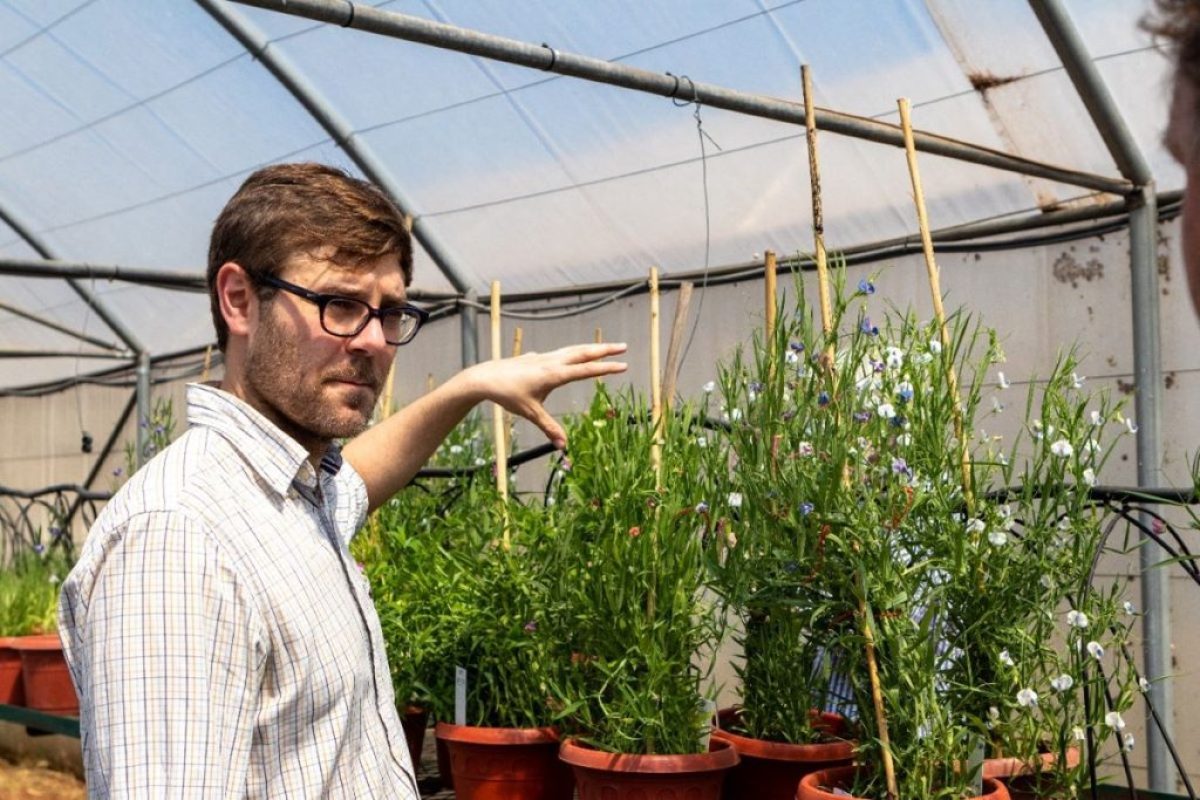
NISD’s Peter Emmrich gave a keynote address at the conference presenting his team’s and collaborators’ work. A milestone was the assembly of a reference genome for grasspea (twice the size of the human genome!), which is now available on international databases. Based on this, the group is now assessing global genetic diversity of grasspea to find genetic variants useful to breeders. Building on the work of Prof Lambein, JIC researchers have also revealed insights into the biochemical mechanisms of the synthesis of the grasspea toxin β-L-ODAP. Now, the group are developing tools to enable rapid improvement of grasspea through modern breeding tools.
Other researchers presented work on nutritional traits the use of diversity sets including wild and cultivated relatives of grasspea, which carry important traits that may be useful for grasspea breeding, particularly resistance to parasitic weeds and high environmental stress tolerance. A particular highlight was a discussion of the current picture and trends of the use of grasspea by a panel of representatives of national breeding systems, who shared their experiences of a reversal in the long trend of decline in grasspea acreages, but also how much the crop is still held back by governmental restrictions of its sale and use, even in areas where low-toxin varieties and improved nutrition have made neurolathyrism outbreaks a thing of the past.
But we must listen to farmers and understand seed systems
A challenge that emerged from the discussions was that we still understand far too little about the seed systems by which farmers in different countries and regions obtain grasspea seed, and how improved varieties can be integrated into existing seed systems in sustainable and fair ways. In addition, we need to strengthen the collaborations between foundational science, breeding and seed system development to ensure that new tools are applied, that new varieties suit farmers’ needs and preferences, and that they are accessible, affordable and familiar to farmers.
Lathyrus Day showed a vision of an international community working together for the rapid and ambitious improvement of grasspea. Over the years to come, we must build a pipeline of crop improvement, that incorporates modern tools, crop breeding expertise, farmers’ voices and seed system partnerships. The conference was generously supported by the Crop Trust and VIB Ghent, and we are looking forward to the next Lathyrus Day scheduled for June 2026 in Dubrovnik!
Share this article