Briefing paper 0 | Published: 31 January 2022
Introducing the Norwich Institute for Sustainable Development
Launched in February 2021, the NISD advances sustainable development through research that harnesses the strengths of the Norwich Research Park. Set in over 230 hectares of fields and wooded area cut through by the River Yare, the NRP is a community of independent research institutes, a public research university and a university hospital in the east of England.
The NRP offers world-leading expertise in plant and microbial science at the John Innes Centre and The Sainsbury Laboratory, and international research excellence in food science, gut biology and health at the Quadram Institute, in computational science and bioinformatics at the Earlham Institute, in international development studies, environmental science, economics, political science, business studies, and nutrition science at the University of East Anglia, and in climate change research at the Tyndall Centre.
The NISD focuses on research that plays to the strengths of the NRP, in particular when synergies across the research park may be exploited for global public good. Our initial focus is on food security and sustainability. Later we plan to add foci on ecological economics, environmental governance, renewable energy and water security.
The NISD has adopted a transdisciplinary approach to research, underpinned by values that include inclusivity, openness and respectful engagement. This approach unites research beneficiaries and users, key societal and political actors, and investigators from an appropriate range of disciplines around a challenge that all of the parties are interested in tackling. We will share what we learn from our research in a series of briefing papers. In this introductory paper – “briefing paper zero” – we set out our plans and describe and illustrate our transdisciplinary approach.
Research programmes
NISD is currently building six research programmes.
1. Environmentally sustainable diets
This programme will produce research outputs that contribute to increasing the production and consumption of plant-based foods in the global North and decrease that of meat and dairy to sustainable levels. NISD research will examine behavioural drivers of consumption, implications of dietary change for human health and nutrition, and how to best support people who want to change their diets. We will also forecast future growing conditions to determine which legumes will thrive in the future, and conduct economic analyses that incorporate the full societal costs and benefits of growing these. Research outputs will be policy evidence, dietary guidelines and nutritional apps, and direction for crop scientists and breeders.
2. Climate-resilient food systems
Climate change will alter the regional distribution of the growing conditions for crops. Given the long lag between work in the lab and improved varieties being available to farmers, for crop scientists to produce the relevant innovations, climate modelling would be useful to inform them about what is required in the coming decades. Based on GIS-linked climate models, the NISD intends to forecast and map future crop growing conditions. This will enable us to identify currently existing agronomic indicator areas in which conditions now are sufficiently like the ones forecasted for a particular region in the future. This in turn informs the crop science research agenda and allows us to study practical ways in which communities are adapting to real-life climate stress which may be
improved or scaled up.
3. Farmer-responsive seed systems and breeding
The NISD is designing tools to measure what crop traits local farmers demand and what aspects of existing seed systems limit access to these traits. We will use this knowledge to (a) inform crop breeding programmes, incorporating foundational bioscience, applied varietal development, and understanding of policy and regulation of the seed market; and (b) design and test seed system interventions to ensure the availability of high-quality seeds, by providing access to information, quality assurance tools (including during transport and storage) and mapping bottlenecks in formal and informal seed systems. Fieldwork is ongoing in Ethiopia and Uganda and planned for Nepal.
4. Equitable knowledge sharing in agri-food systems
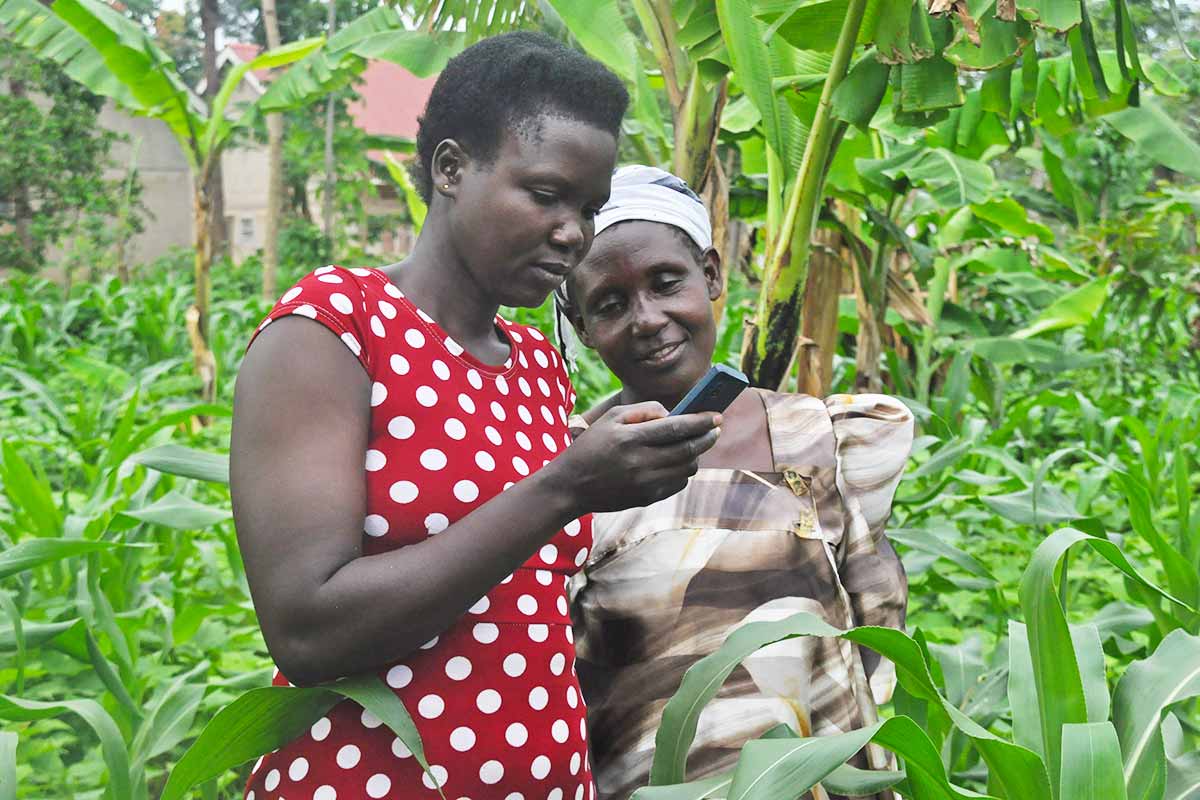
Farmers in developing countries often don’t have access to potentially beneficial information, for example which pest attacks are on the way and how to protect against that, which diseases are affecting plants and what to do about that, which risk protection measures are available and how do they work, is the seed on offer of good quality, and so on. The NISD is building a knowledge-sharing platform and diagnostic tools to help farmers answer such questions. We intend to develop smartphone apps that village agents (educated, underemployed local young people) deploy on behalf of farmers, so that the latter have easy access to relevant information. Work is ongoing in Uganda.
5. Supporting sustainable soil management
Healthy soils are crucial to minimise GHG emissions from agriculture, maintain biodiversity and safeguard crops against climate change impacts. Soil health is affected by the choice of crop species and environmental conditions, but most of all by soil and land management practices (including cover cropping, rotations, pest and nutrient management, livestock integration, etc.). If soil carbon sequestration is to be a significant climate mitigation and adaptation strategy, scientifically sound soil management practices need to have lasting appeal for farmers. To this end, the NISD plans transdisciplinary work combining behavioural economics and agricultural and soil science to determine optimal management practices in different soil types and crop systems, and the information, policies and market signals needed to encourage and inspire farmers to widely adopt such practices.
6. Resilient aquatic food systems
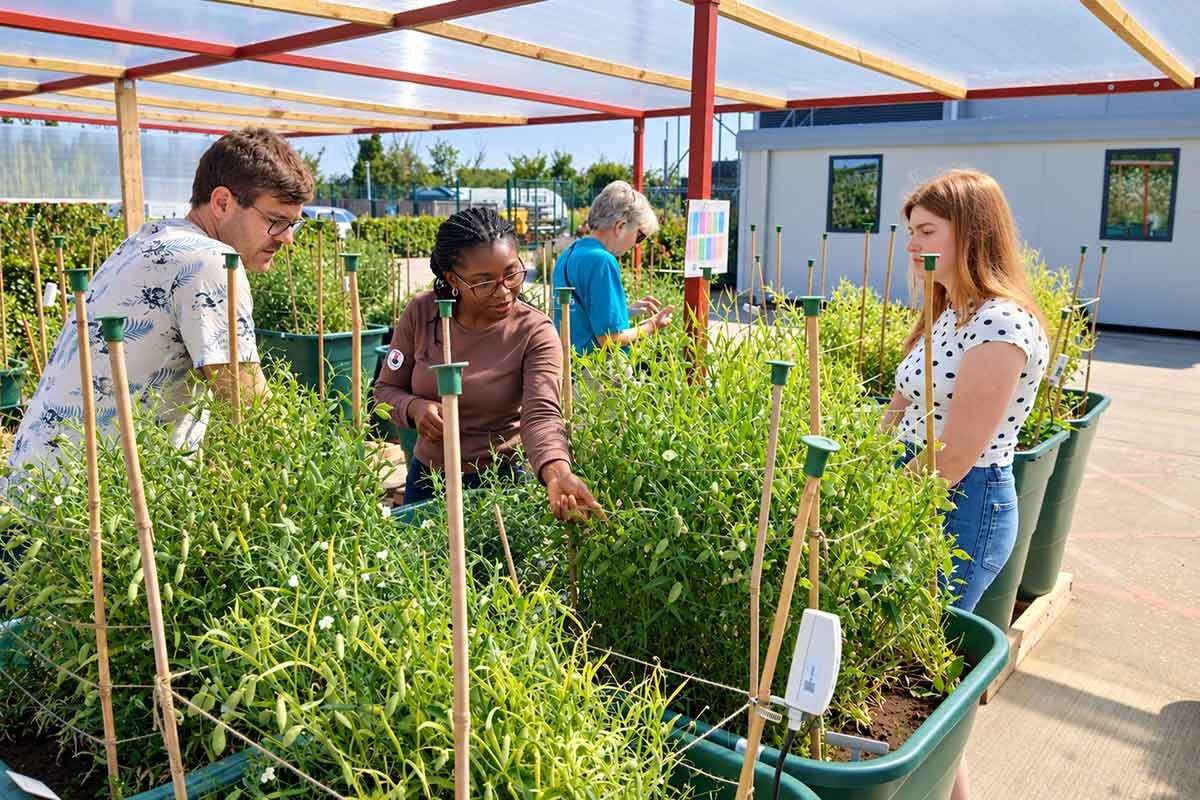
Animals and plants grown in or harvested from water play a crucial part in sustainable food, nutrition and livelihoods security across the globe. NISD research aims to improve the resilience of aquatic food systems through a transdisciplinary approach that combines (a) genetic analysis to inform breeding strategies for better feed efficiency, disease resistance, and tolerance to climate change; (b) gendered livelihoods analysis to better understand the role of aquatic foods in sustainable livelihoods, to inform the genetic analysis mentioned (which traits matter for producers), and to assist the design of appropriate post-harvest processing, marketing, finance and insurance models; (c) nutrition studies to examine the content and bioavailability of vitamins, minerals and healthy fats in locally available or newly introduced aquatic foods (e.g. fish powder or edible algae); and (d) socio-economic analysis of consumers’ dietary habits to assess how nutritious aquatic foods may be best accommodated in sustainable diets, with a special focus on reaching low-income consumers. The impacts that we would like to see from these six programmes are wide-ranging and diverse. Among many others, they include changes in UK policy to support sustainable soil management, risk management solutions for coping with climate change for smallholder farmers in the world’s semi-arid regions, and the removal of toxicity from grass pea, an important drought-resilient crop across the global South. For helping ensure that NISD research will have the desired impacts, we have adopted a
transdisciplinary approach.
A transdisciplinary approach
The NISD approach to research is a transdisciplinary one. This means that multidisciplinary teams work together to address a common problem in a manner that moves beyond (‘transcends’) discipline-specific approaches. It also means working with non-academic partners to ensure relevance. Our approach can be summarised in three imperatives.
1. Combine disciplines pragmatically, as suggested by the challenge, being as innovative as is required in terms of concepts, theories and methods.
2. Co-produce knowledge with stakeholders, working with research users and beneficiaries; those who should act for desirable research impacts to come about; and those who are affected by the research or its impacts. These stakeholders often possess or can produce knowledge that is not otherwise accessible to academics. Moreover, academics and societal stakeholders doing research together may create synergies in knowledge production.
3. Design the theory of change and the research simultaneously. A theory of change links research outputs to desirable research impacts – which steps need to be taken by whom to bring about the change we would like to see as a result of our research. In the light of the theory of change, research outputs will often need to be adjusted, and vice versa.
These three imperatives serve as a simple checklist when designing new projects. An illustration of our transdisciplinary approach is given in the text below:
Case study
Promoting the production and consumption of UK-grown legumes
For research programme 1, the NISD is designing a research project that aims to encourage the production and consumption of legumes in the UK, which are good for low-input agri-food systems and for consumers’ health.
We have brought together a research team of agricultural economists, behavioural economists, climate modellers, nutrition scientists, crop scientists, food system experts and supply chain analysts to study the drivers of demand, the barriers to and enablers of supply, and implications of climate change for growing conditions for legumes in the UK (Imperative 1).
The NISD is working together with a pioneering supplier (Hodmedod) and the processors and growers organisation (PGRO) of UK-grown pulses and beans; we are consulting policy makers from the Food Standards Agency (FSA) and the Department for Environment, Food & Rural Affairs (Defra); and we are linked to crop breeders through JIC’s leadership of the Pulse Crop Genetic Improvement Network (PCGIN) (Imperative 2).
The theory of change and the research are designed simultaneously (Imperative 3), as follows.
- Societal trends towards plant-based diets point to a potential new consumer appetite for legumes, as a plausible replacement of meat. We use
behavioural economics and nutrition science to study how that appetite can be responsibly encouraged. Working with Hodmedod provides inspiration for research on the effectiveness of various legume marketing strategies. Likewise, working with the FSA informs us about the nutritional guidance that we would like to influence, which shapes our research. - From PGRO and DEFRA, we learn about supply chain limitations and
feasible public support measures for growers and processors, anticipating
which influences our research design, for instance cost-benefit analysis to
quantify the externalities of growing legumes, to inform agricultural policy. - Working with crop breeders through PCGIN helps us understand the legume varieties amenable to improvement, which in turn influences what we focus on when forecasting future legume growing conditions in the UK.
Share this article