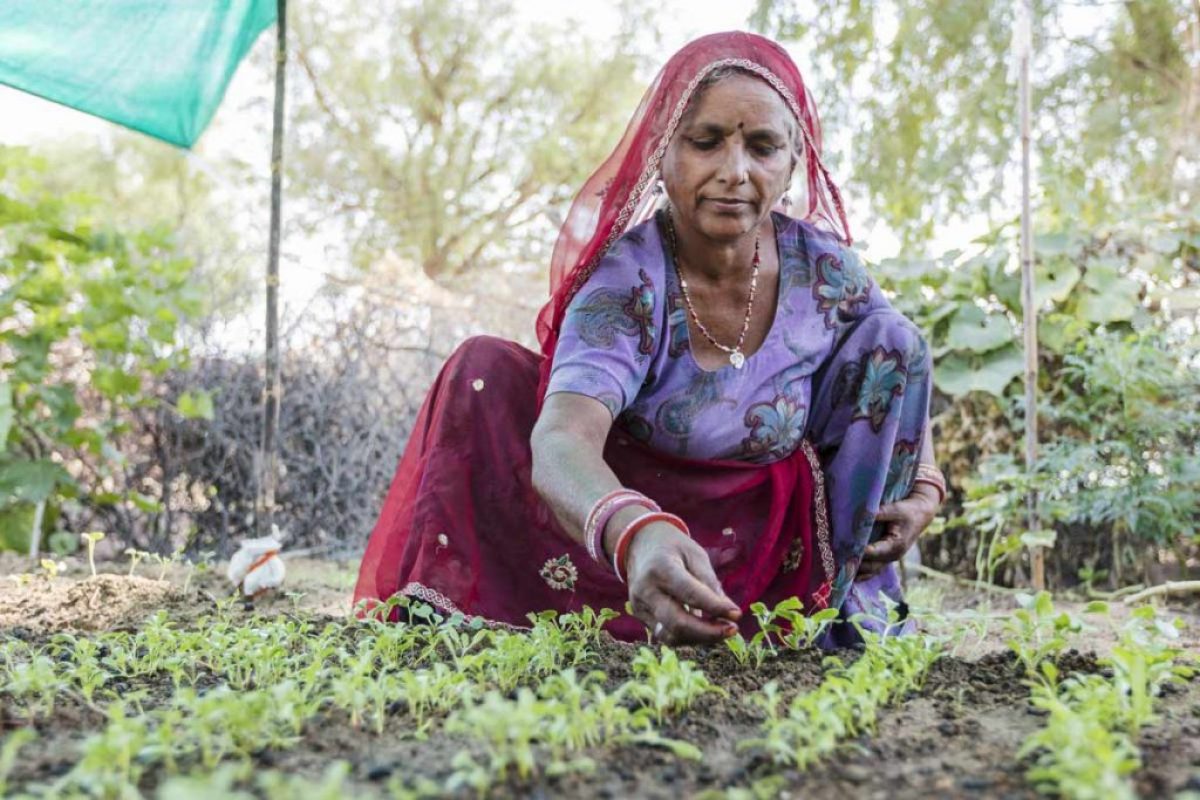
The achievement of food and nutrition security in South Asia is deeply gendered
This article is a shortened version of an article by Professor Nitya Rao of the same title that appeared in Nature Food. You can read the full article here. All images in this article are credited to Toby Smith as part of his work with the TIGR2ESS project, of which Professor Rao is a co-investigator.
Despite economic growth, food and nutrition security has not improved in South Asia, a phenomenon commonly referred to as the South Asian enigma. South Asia continues to be placed in the ‘serious category’ by the Global Hunger Index, with poor child nutrition outcomes generally seen to result from proximal causes such as poor infant and young child feeding practices, poor nutrition among women before and during pregnancy, and poor sanitation practices. However, there are multiple contextual drivers relating to gender that contribute to the South Asian enigma.
Women form an integral part of the agricultural sector, and in much of South Asia make up a majority of the agricultural workforce, often compelled to work for low or no wages and in poor conditions, in order to meet their families’ basic needs. While their contributions are recognised as central to the food and nutrition security of households and communities, their work is not recognized or supported adequately by public policy and social institutions.
Women continue to face inequality across key development indicators including health, education, and nutrition; discriminatory laws; and high levels of precarity in terms of income, employment conditions, safety and wellbeing. This is intensified by social structures and norms that promote gender inequality and inhibit the agency of women.
In addition, there is a question of female survival itself, resulting from sex selection before birth, or growing incidents of violence throughout their life-course. Varied forms of structural violence restrict women’s mobility and access to labour markets and productive assets, which together constrain the time and finances they have to source nutritious food for their families. Social norms and gendered power relations further shape when and how women eat, causing them to at times pursue high risk-behaviours to ensure food security for themselves and their children.
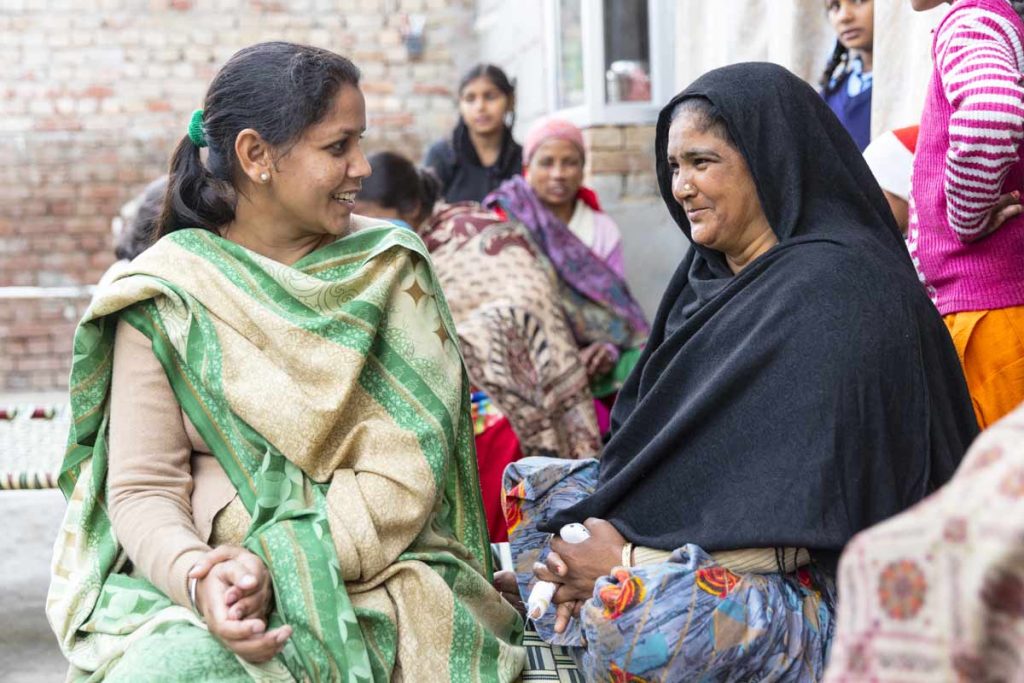
The resilience of food systems is deeply gendered
The resilience of food systems depends upon political, economic and social relations – and these factors are deeply gendered.
For example, when mechanisation of agriculture was introduced, the technology was controlled by men and specifically displaced the work of hired female labour. While some rural women made up for this by focusing more on unremunerated family labour, this resulted in women being both financially poor as well as time-poor. An individual without money or time can neither buy nor forage diverse diets.
Governments have offered welfare programmes to assist the rural poor. These include provisions of rice, pre-paid electricity, cash and in-kind entitlements. Such measures have helped, but it is the ongoing exclusion from sources of income, both due to the
gender segregation of labour markets, and the wage gaps within them, that constrain the choices available to women. While men are able to migrate to find work, women are left with the responsibility of the farm, the household and caring for the young and elderly, restricting the nutritional security they can attain.
Ownership of productive assets is vital for agricultural returns. Women are much less likely to have control over land, energy, pasture, forests, inputs, credit, insurance, information and markets. These are not just material goods but sources of power that are unequally distributed by gender. Such resources are seen as male and associated with the role of a man as a provider. Subsequently women’s claims to such assets can be seen as deviating from the norms and incur violent backlashes.
Towards gender equality in food and nutrition
Women in general are not looking for autonomy but mutuality and reciprocity. There is a need to move away from a binary view of men and women. Instead, we must see gender as a relational construct that shifts in response to changes in the policy context, labour market signals and household and community level needs and aspirations. Research needs to focus much more on understanding how these contextual factors influence both gender relations and food security.
Gender-just food and nutritional security then involves recognising women as producers and strengthening their entitlements. Women’s time poverty is a cause of intergenerational nutritional disadvantage.
Innovations are needed that reduce time demands on women farmers, but also enable men to share burdens of production and reproduction. Mobilisation of women to address the problem of their poorly defended rights will go a long way towards ensuring food, nutritional and wider livelihood security.
Original paper reference:
Rao, N. (2020) The achievement of food and nutrition security in South Asia is deeply gendered. Nat Food 1, 206–209. https://doi-org.uea.idm.oclc.org/10.1038/s43016-020-0059-0