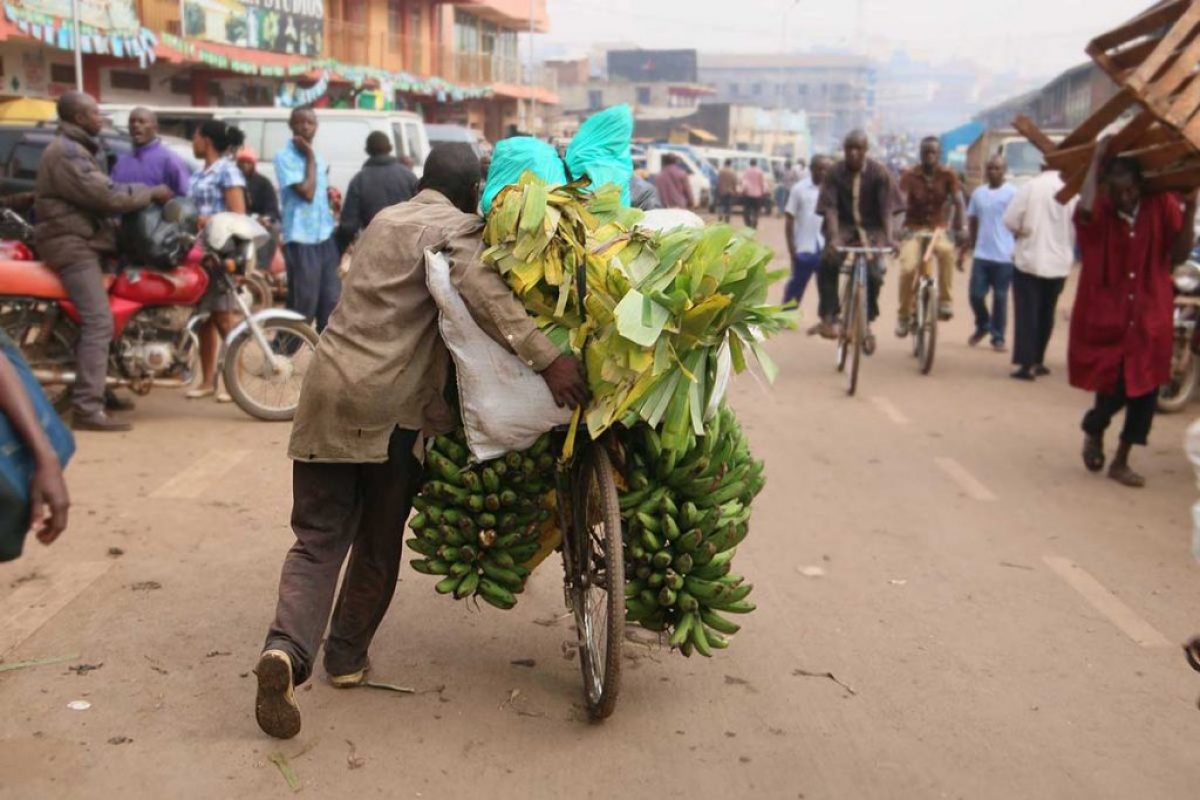
NISD researchers receive ESRC impact award
Ben D’Exelle and Arjan Verschoor were given the 2020 Economic and Social Research Council (ESRC) Celebrating Impact Award for outstanding business and enterprise impact. This is in recognition of their research among farmers in Uganda, dating back to 2001, which helped establish a drought insurance scheme in the country.
The scheme now protects more than 220,000 smallholder farmers against the risks to their livelihoods posed by drought, pests and poor quality seed, and boosts productivity by providing smallholders with the confidence to invest in their farms. Insured farmers increase investment by 60-100%, offering a safe way out of poverty and an important step towards improve food security.
The research the award recognises
Underinvestment in Ugandan smallholder farming means that for many farms, productivity remains low. This low productivity results in food insecurity and poverty that make it very hard for farmers to survive.
Part of the reason for this low productivity is that farmers face a range of challenges each year that are hard to predict. Risks come in the form of droughts or floods, pests and diseases and problems with poor quality seed and agricultural inputs.
Since 2001, Professor Verschoor and Professor D’Excelle have been studying Ugandan farmers cope with these risks. A result of this research is that it can inform insurance packages that are suited to the needs of farmers. Farmers who take these insurance programmes out are not only protected against risks, they are more likely to make investments that can help them escape poverty.
“We realised that farmers only invest what they can afford to lose,” said Professor D’Excelle, “this is because one in six years, a drought wipes out the harvest”. When farmers face a disaster like this, if they cannot afford to pay back any loans they have made, the banks appropriate their land, causing them to lose their main livelihood. The research also found that farmers share risks to protect individuals who are unlucky, but this also means that farmers invest less to prevent others being exposed to their risk. Through working with government officials, farmers and insurance agencies, the researchers designed risk management solutions to help Ugandan farmers.
Insurance is now offered with high quality, certified seed and pesticides to protect farmers from the major risks of the season. This in return makes farmers more confident to invest in strategies that reduce their chances of poverty. These insurance schemes were taken up by 10 insurance companies and since 2017, over 225,000 policies have been sold to date.
Farmers now invest between 60-100% more in their farms as a result of these insurance schemes. This additional investment causes farm productivity to nearly double, providing farmers with greater food and financial security. The ESRC award recognises the impact this project has achieved in Uganda and other developing countries.