Improving the Sustainable Farming Incentive for Norfolk? Insights from Poland
Georgia Oliver is the second recipient of the RNAA/NISD Norfolk International Scholarship. Here she summarises her research in Norfolk and Poland as part of her master’s dissertation and scholarship.
Key messages:
- The new SFI policy changes too often, making it hard for farmers to plan.
- Farmers need viable, market linked incentives, not just compliance payments.
- Trusted advice and clear evidence make farmers more likely to change behaviours
- We could explore applying Terra Nostra’s regenerative agriculture certification scheme in Norfolk
The UK’s creation of the Sustainable Farming Incentive (SFI) represents a major change in how agricultural policy is delivered. Farming still covers around 69% of land and sits at the heart of food production, biodiversity, and climate outcomes, so the stakes are high. The environmental ambition behind SFI is clear. But as recent experience in Norfolk shows, translating that ambition into something that works on the ground is not straightforward.
The Sustainable Farming Initiative is a UK government-funded scheme, part of a wider suite of Environment Land Management Schemes that replace the EU’s Common Agricultural Policy after Brexit. These schemes pay farmers and land managers public money for actions that improve the environment, including biodiversity restoration, carbon reduction and cleaner air/water. The SFI pilots went to full multi-year scheme roll out in 2023/2024. However, by March 2025, due to unanticipated high application rates, 31,900 businesses had agreements in place in the UK. By October 2025, £848 million had been committed. The scheme was pulled in March 2025 with no prior notice.
Research carried out in Norfolk during 2025 set out to understand why uptake of SFI has been patchy, particularly in highly productive arable systems. Through interviews with farmers, advisors, and policy actors, a consistent picture began to emerge. Some farms were ‘early adopters’ and have implemented significant numbers of SFI actions. Others have avoided it. Policy instability, following the March 2025 funding pause, has deeply shaken the nascent confidence in the scheme and made long-term planning difficult. Access to advice is also uneven, meaning some farmers feel well supported while others are left navigating a complex scheme with limited guidance. On top of this, structural and behavioural factors—such as tenancy arrangements or ingrained ideas of what “good farming” looks like—continue to shape decisions in ways policy doesn’t always account for.
What is striking is that this is not about a lack of willingness. The hesitation comes from questions of risk, practicality, and whether the system can be relied upon. The underlying question remains for Norfolk farmers of whether regenerative agriculture practices bring long term environmental benefits to the farm, and whether and how this type of production can be leveraged to add value to farm produce.
To explore what might help address these issues, the research looked to Poland, where regenerative agriculture has expanded quickly through approaches that combine public policy with private sector involvement. A new landscape scale project, the Lower Silesia 360 project, aims to regenerate 20,000 ha and 200 farms to sustainable practices. The Terra Nostra certification scheme offers a useful and inspiring working example of how transition can be supported. The scheme is independently verified, with a 70% compliance threshold needed for certification and annual audits. It brings together financial incentives, advisory support, and independent verification into a single system.
For farmers, the appeal to become certified is fairly clear. Certification can deliver a price premium—around €20 per tonne—while also improving access to markets and strengthening relationships with buyers. Just as importantly, it reduces risk. The auditing process, which is data-driven and independently verified, is not generally seen as a box-ticking exercise but as something that helps farmers understand and improve their own systems over time. Environmental benefits are part of the outcome, but they tend to follow from the fact that the system makes sense economically.
Looking back to Norfolk, the contrast is quite telling. SFI is often experienced as something driven by policy requirements, whereas the Polish example feels more like a system that works with the grain of farm businesses. It suggests that stability, financial viability, trusted intermediaries, and meaningful use of data are all important in shaping engagement.
As the next version of SFI planned roll out starts in June 2026 (for small farmers/new applicants) and September 2026 for others, farmers and land agents are busy preparing for the application window. However, the wider question is less about tweaking individual elements and more about how the system fits together as a whole. We recommend the following:
- Stabilise the SFI policy incentive so farmers can build confidence
- Find ways to create financial viability with market incentives for regeneratively produced products
- Create an accessible based of trusted intermediaries
- Create credible, independent advisory systems
- Gather and share data and evidence with the farming community on the economic and environmental impacts /improvements
If environmental action is to be embedded in commercial farming, it needs to align with how farm businesses actually operate. Where that alignment exists, farmers are not reluctant participants, but proactive leaders—they are much more likely to engage on their own terms.
Georgia Oliver was awarded the 2025 RNAA/NISD Norfolk International Scholarship. She gained a Distinction for the MSc Environment and Global Development in the School of Global Development at the University of East Anglia. She is now starting a position as Farm Technical Graduate with G’s Group, one of the UK’s largest fresh produce growers.
This research forms part of the NISD’s Local Focus on Sustainable Agriculture (LINK: https://nisd.ac.uk/local/).
Presentation to the RNAA Council 23 April 2026.
Contact: Georgia.oliver@gs-fresh.com and Dr Natasha Grist, NISD Sustainable Food and Farming Local Lead n.grist@uea.ac.uk.
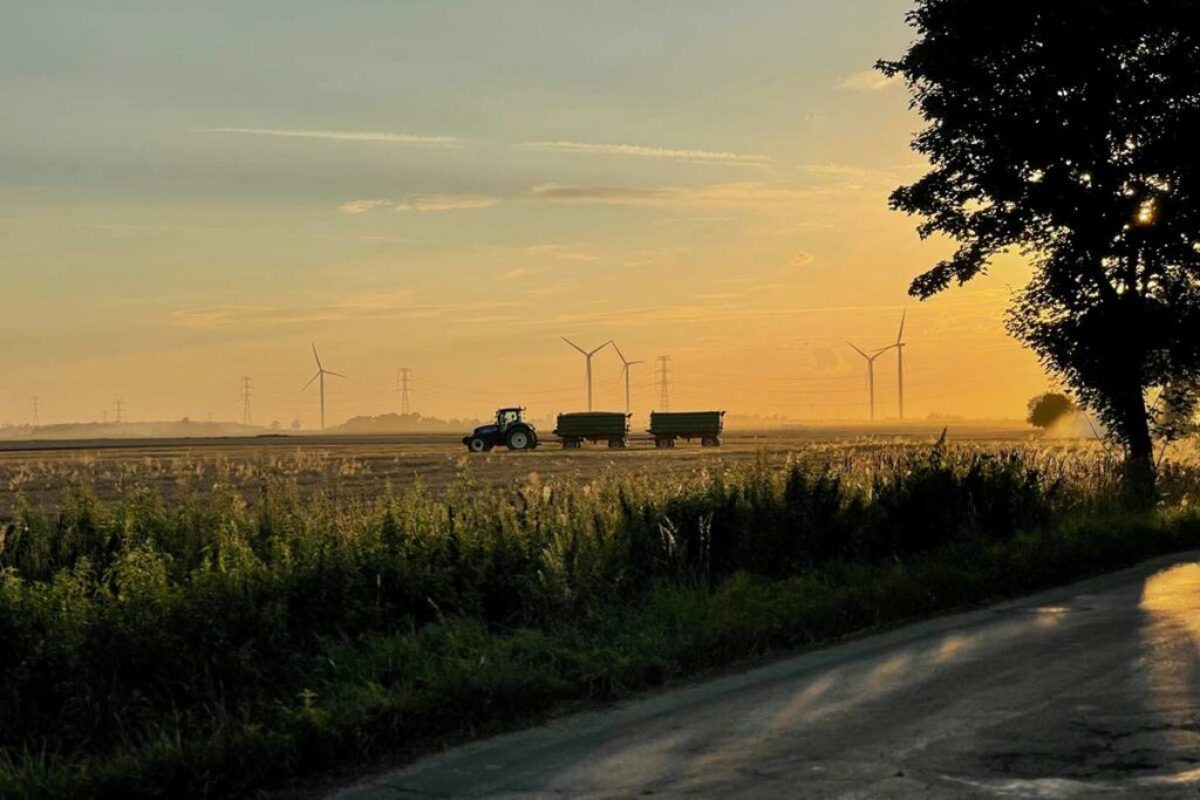
Photo by Mateusz Niezgoda on Unsplash
Authors

Natasha Grist

Georgia Oliver
Share this article
Follow us