Growing Value, Greening Farming Futures: key messages from the 2026 Norfolk Farming Conference
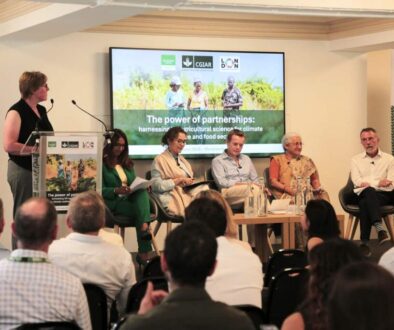
This year’s Norfolk Farming Conference brought together farmers, policymakers and thought leaders once again, this time with a significant shift in the agenda items towards sustainable and regenerative agriculture. Once primarily a regional farmers’ catch-up, the NFC has evolved into an inspiring forum for ideas and innovation. What emerged across the conference was a shared recognition that the future of farming depends on integrated thinking — connecting business resilience, environmental stewardship and social influence.
Business Resilience and Strategic Innovation
A dominant theme of the conference was building resilient farm enterprises in a volatile economic and environmental landscape: -‘achieving more value from our land’. Panellists agreed that the food and farming industry have the next two years to implement a fundamental reset of how we view food and farming, according to most.
With a dearth of coherent UK agricultural policy, speakers recommended Minette Batters’ Farm Profitability Review (with caveats) and the 2026 Oxford Farming Conference Grasping the Opportunities as essential reading on current situation of UK agriculture. Belinda Clarke spoke of her efforts to have Agritech specifically named in the UK government’s 2025 Modern Industrial Strategy, an essential step to secure significant investment. Keynote speakers framed the discussion around commercial adaptability and strategic planning for long-term viability – getting more value from the land with doing farming better, using science and relevant research and development to improve yields and breeding.
Creative diversification for farm business resilience was a central theme: Henry Astor related the story of his move from conventional wheat production to include heritage varieties alongside commercial, and moving into buying his own mill, expanding this side of the business to recoup a greater share of the profit margin he saw being leaked elsewhere on his products. Joe Howard, Johnny Wake and others gave great examples of multiple diversification options through vertical integration, testing and growing crops with supermarket collaborations, trying livestock including beef, sheep and (more lucrative) intensive poultry, constantly tweaking and sometimes making radical shifts to the business where needed. They emphasised creative diversification, market insight and efficiency as drivers of business sustainability.
Environment as Opportunity: making a narrative
Environmental stewardship was central to discussions — not as a burden, but as an opportunity for competitive advantage and long-term resilience. David Webster emphasised that environmental performance is not a distraction from commercial success. He encouraged farmers to make practical, incremental change and evidence this better, with an open dialogue across the supply chain. LEAF’s Regen Academy is amongst several new initiatives supporting this. Tom Raynham spoke of the need for standardised monitoring on environment and carbon. Emily Rant demonstrated the Mondra data tool, where every aspect of the Life Cycle Assessment of a supermarket product could be traced, identifying the environmental impact level of processes and ingredients. Case studies including David Cross, Johnny Wake, Tom Raynham and Ryan McCormack showed how regenerative approaches can improve productivity, reduce risk and support nature.
Voices for Change: Storytelling and Systems Thinking
Jules Pretty encouraged delegates to consider the narrative of their farming businesses, to seek new opportunities with environmental benefits including practical solar power plug ins and support through Biodiversity Net Gain support. Olly Harrison spoke of his unexpected social media success and said it needs a negative ‘hook’, to speak of the failures, to get people interested – and has been surprised by how many people join for informative content about how his machinery works and the detail of his farming approach. Amy Jackson and Ryan McCormack prompted delegates to take a proactive role in considering who their audience is and tailoring narratives about farming, sustainability and rural livelihoods. Their message was clear: authentic storytelling is a strategic tool for influence, policy engagement and community connection.
Looking Ahead: A Shared Vision
Hosted by the Royal Norfolk Agricultural Association, the Norfolk Farming Conference underscored a shared purpose: transforming agriculture to be more economically robust, environmentally regenerative and socially inclusive. For organisations like NISD, these conversations aren’t abstract — they’re a call to collaborative action, bridging research, policy and practice to shape sustainable and equitable food futures across Norfolk, the UK and beyond.
This blog is part of a series of NISD engagements with sustainable food and farming across Norfolk’s agriculture industry.
Authors

Natasha Grist

Georgia Oliver

Deima Daujotaite
Share this article
Follow us