Listening to the Voices of Small Farmers: Insights from Fieldwork in Mysore
Manasa Sharma, NISD PhD student
“Water scarcity is a serious problem. Due to overuse, we have to drill much deeper, sometimes over 250 meters! This isn’t sustainable. […] We all need to find alternative water sources and be more responsible with what we have. We have to be honest, hardworking, and avoid manipulation.” Mysore Farmer, interview excerpt translated from Kannada.
——
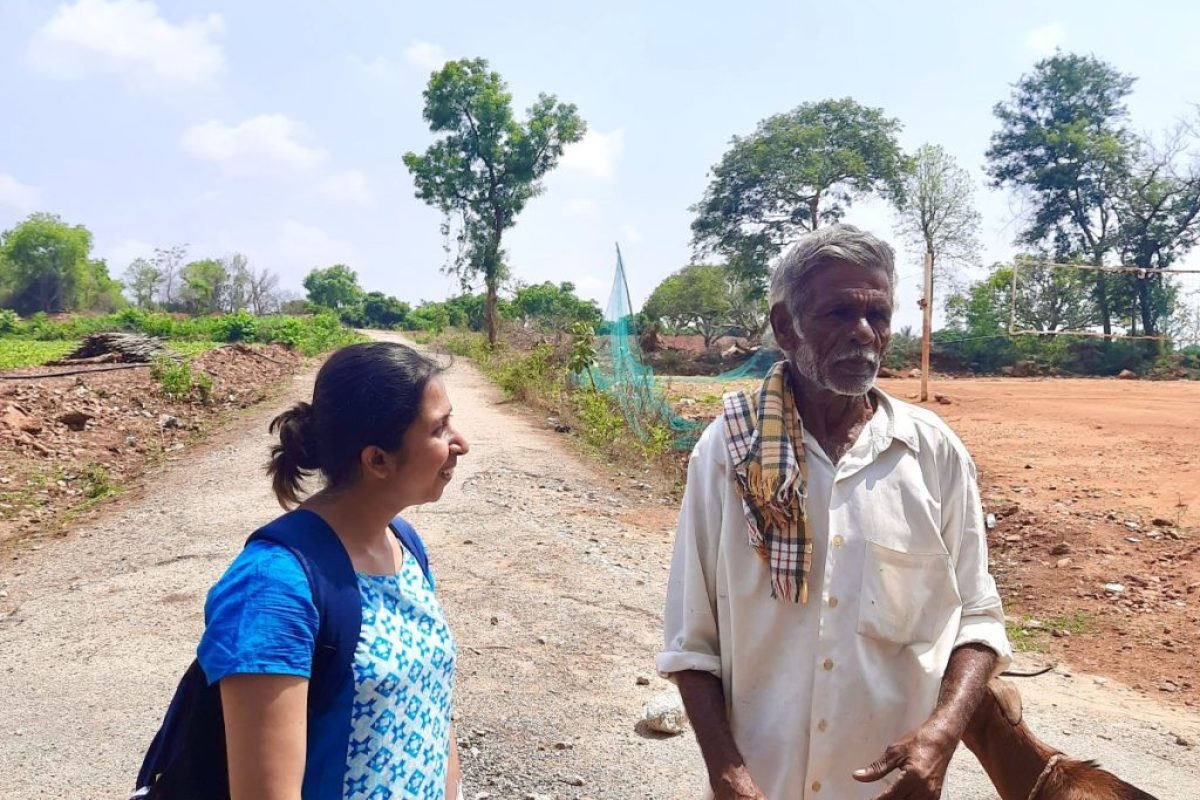
In the semi-arid landscapes of Mysore district in Karnataka, India, small and marginal farmers are facing the impacts of climate change firsthand. As part of my PhD research on future climate risks to smallholder agriculture systems in the global south, I spent the last 6 weeks exploring the realities of these farming communities, and seeking to understand their lived experiences, adaptation strategies, and the policy gaps that hinder their resilience.
Through 44 interviews with farmers and 3 focus group discussions with community leaders, I bore witness to the challenges that dryland and wetland farmers grapple with due to increasingly erratic rainfall patterns, droughts, and unsustainable farming practices. These challenges not only threaten their livelihoods but also carry far-reaching implications for regional food security and ecosystem health.
Dryland: Coping with Rainfall Variability
In the rain-fed, dryland farming villages north of the Kabini river, the impacts of climate change manifest as shifting rainfall patterns and prolonged dry spells. Farmers shared accounts of crop failures, dwindling yields, and the disappearance of traditional crops like pigeon pea due to the lack of timely pre-monsoon and monsoon rain. Their coping mechanisms, often rooted in generations of traditional knowledge, involve crop diversification, changing planting dates, and a reliance on drought-tolerant crops like millet and pulses. However, their adaptation methods are hindered by limited access to drought-resistant seed varieties and crop insurance, lack of trust in government, detached worldviews concerning climate change, and lack of awareness about innovative irrigation solutions.
Farmer: ಈ ವರ್ಷ ಬರ ಪರಿಸ್ಥಿತಿಯನ್ನೇ ಕಂಡುಕೊಂಡಿದ್ದೀವಿ. ಕಾಲುವೆಗಳಲ್ಲಿ ನೀರು ಇಲ್ಲ. ಈಗಾಗಲೇ ಬಿತ್ತನೆ ಮಾಡಬೇಕಿತ್ತು, ಆದರೆ ಇನ್ನೂವರೆಗೆ ಮಾಡಿಲ್ಲ. ಹಲವು ವರ್ಷಗಳಲ್ಲಿ ಇಂತಹದ್ದನ್ನು ನಾವು ಅನುಭವಿಸಲಿಲ್ಲ. (Ī varsha bara paristhitiyanne kaṇḍukoṇḍdvi. Kāluvēgaḷalli nīru illa. Īgāgalē bittane māḍabekiṭṭu, ādate innuvarege māḍillā. Halavu varshagalalli intāhaddu nāvu anubhavīsaliḷḷa.)
“This year, we have faced a drought-like situation. There is no water in the canals. By now, we should have sown the seeds, but we haven’t been able to do it yet. We haven’t experienced anything like this in many years” – Mysore Farmer
Wetland: Overexploitation and Environmental Degradation
In the irrigated wetland regions near and south of the Kabini River, a different narrative unfolds. Here, the pursuit of water-intensive cash crops like ginger and sugarcane has led to rampant groundwater overexploitation, soil degradation, and water pollution from excessive agrochemical use. The unsustainable practices of some farmers, coupled with a lack of regulation and environmental safeguards, threaten the long-term viability of agriculture in the region, especially as the conversion of fertile lands to monoculture cash crop cultivation raises concerns about food security and biodiversity loss.
Bridging the Gap: Towards Inclusive and Sustainable Adaptation
It is evident to me that there is a pressing need for inclusive and sustainable adaptation strategies that address the diverse challenges faced by small and marginal farmers. This requires a multi-pronged approach involving:
- Strengthening agricultural extension services and knowledge dissemination, with a focus on empowering marginalized farmers through community-driven initiatives and localized solutions.
- Promoting climate-smart agriculture practices, such as water-efficient irrigation techniques, soil conservation measures, and integrated pest management, while addressing existing policy barriers.
- Facilitating access to drought-tolerant crop varieties, crop insurance schemes, and innovative financing mechanisms to support smallholder resilience.
- Implementing robust environmental regulations and incentives to discourage unsustainable water exploitation and agrochemical overuse, particularly in water-stressed regions.
- Fostering diversified and resilient food systems that balance economic opportunities with environmental sustainability and nutritional security.
As the Global South grapples with the disproportionate impacts of climate change on agriculture and food systems, insights from farmers, coupled with interdisciplinary research and multi-stakeholder collaborations, can inform adaptation policies that are tailored to local contexts, socially inclusive, and environmentally sound. The findings from my fieldwork also underscore the importance of agriculture in achieving the goals outlined in the Paris Agreement on climate change. As a signatory to the agreement, India has committed to reducing its greenhouse gas emissions and enhancing climate resilience, with a specific emphasis on the agriculture sector. Small and marginal farmers, who constitute a significant portion of India’s agricultural workforce, play a crucial role in this endeavor. Their resilience in the face of climate impacts is intrinsically linked to India’s ability to adapt to the changing climate and ensure food security for its population.
By integrating the experiences and perspectives of these farmers into national and international policy dialogues, India can develop more inclusive and effective strategies for achieving its Nationally Determined Contributions (NDCs) under the Paris Agreement. This not only aligns with the Agreement’s principles of equity and common but differentiated responsibilities, but also ensures that the voices of those most vulnerable to climate change are amplified in the global effort to combat its impacts.
In the next phase of my research, I will move on to Wayanad, Kerala, to study the impacts of the severe floods on small farmers.
Share this article