NISD release new brief on avoiding Ethiopian neurolathyrism outbreaks
Researchers have uncovered the potential for a “perfect storm” in Ethiopia that, if unchecked, could lead to increased outbreaks of paralysis. This emerging situation centres around grass pea, a resilient and nutritious crop but one that can be toxic if relied upon alone. In a new policy brief, the NISD researchers provide recommendations to better inform and protect farmers against this threat.
Grass pea use in Ethiopia
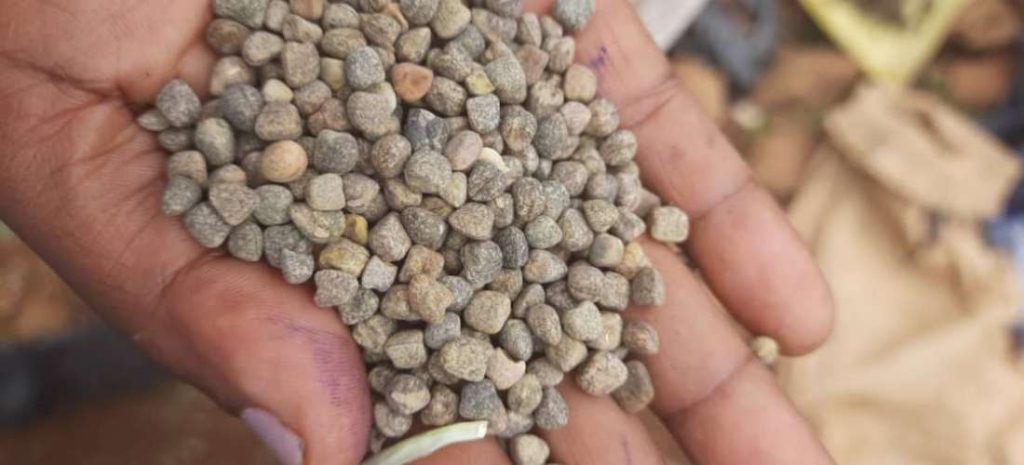
Grass pea (Lathyrus sativus) is a nutritious, tasty and low-input crop that is one of the most weather resilient legumes. These traits make grass pea an ideal climate resilient crop choice for substance farmers. For these reasons, grass pea is becoming a staple for Ethiopian mid and highland farmers. However, under certain circumstances, grass pea can be risky to eat.
Grass pea contains a substance called β-ODAP that is safe to eat as part of a balanced diet but can be toxic if eaten in limited diets over extended time. Individuals who eat too much run the risk of contracting neurolathyrism, irreversible paralysis of the lower body. The risk is one of balance: grass pea is nutritious and safe as part of a mixed diet but potentially dangerous if relied upon alone. The challenge is that climate changes are raising the likelihood of situations where grass pea becomes a dominant part of the diet.
“Because grass pea is so resilient, it is often one of the last crops left for the vulnerable when climate or political shocks occur”, said NISD researcher Matt Heaton, “Under these situations farmers will rely more on grass pea as the main food component and knowingly or unknowingly put themselves at risk. In this new brief, we’ve outlined ways to promote safer consumption of this useful crop.”
Rising risks of paralysis
Climate changes in Ethiopia are causing seasonal weather to become more unpredictable in Ethiopia. These weather changes particularly affect the majority of smallholder farmers who rely upon rainfed agriculture. When shocks do occur, less resilient crops fail and farmers are more dependent on a limited diets of hardier crops. It is under these situations that farmers raise their risks of contracting neurolathyrism when they rely more dominantly on grass pea for extended time.
Farmers know about the toxic quality of grass pea but the source of this risk and how to mitigate it is varied. This results in farmers practising a range of risk prevention methods that lack scientific evidence of effectiveness. Farmers also believe that the grass pea they grow today is safe to eat, despite lab tests not finding this change in β-ODAP levels. Instead it seems that farmers might have been experiencing fewer neurolathyrism outbreaks over the past two decades due to the general diversification of diets and absence of extended droughts in grass pea growing areas. The situation has however changed in recent years of increased political instability and drought, causing a limiting of diets.
“[Neurolathyrism] has become more of seasonal epidemic as well as endemic…it has become commonplace to see young men crippled with the typical scissoring gait of spastic myelopathy begging in the streets of cities in Ethiopia.”
Medical professional interview respondent
Mitigating neurolathyrism risks
There are multiple ways to reduce the risks of neurolathyrism from grass pea. The first is consuming grass pea as part of a diverse diet but as mentioned, this is not always possible for farmers. β-ODAP levels can be reduced through processing methods but these require time and resources which might not be possible for marginalised groups. These processing methods are also not compatible with all dishes which might contain grass pea.
Another approach is to breed reduced toxin grass pea varieties which contain low amounts or zero β-ODAP. These varieties would grant farmers with all the benefits of grass pea with little or no risk. Plant biologists and breeders have formed international collaborations to develop these new varieties. However farmer uptake of varieties is based upon a number of factors. Solely marketing reduced toxin content might not encourage uptake – especially if farmers believe that their current varieties are already safe.
In the the new policy brief, the NISD shares findings of a selection of traits that influence farmer adoption of grass pea, and how much they change likelihood of adoption. Importantly, farmers do value safer varieties but other traits have greater influence on their decision to adopt. Incorporating these qualities and foregrounding them at the point of acquisition might improve farmer uptake of safer varieties. The brief also outlines government, public and extension approaches to reduce the likelihood of neurolathyrism incidence.
This report was informed by a research collaboration over the previous two years between the UEA School of International Development and the John Innes Centre. The work was funded by UKRI-BBSRC. The full academic findings from this work are currently in review for publication.
Any questions regarding this research can be directed to m.heaton@uea.ac.uk
Share this article