
SeedSentry
A new approach to cheaply tracking seed spoilage risks in complex systems.
The sustainable development need
Well-functioning seed systems that help ensure that farmers can grow resilient, nutritious, high-yielding crops.
Agricultural innovations that make crops more disease resistant, able to withstand weather extremes, nutritious and high yielding make their way into the hands of farmers through seeds.
But in developing countries, seed systems are often poorly regulated, complex networks of formal and informal supply chains. Unknown stress conditions such as adverse temperature and humidity, during storage and in transit, greatly affect the quality of seeds.
By the time seeds reach the outlets that farmers have access to (e.g., local shops or itinerant traders), they are often of sub-optimal quality, no longer able to deliver the agricultural innovation that they embody. Crucially, their quality is well-nigh impossible to detect at the point of purchase, which means that farmers avoid them, instead relying on traditional alternatives.
As a result of the poor institutions supporting seed systems in low-income countries, agricultural innovations are not taken up that have the potential to deliver higher, more stable incomes for farmers and food security for the countries they live in.
Our transdisciplinary response
Reliable information about seed quality at the point of purchase would circumvent the problem of poor regulation of seed supply chains that thwarts the delivery of promising agricultural innovations into the hands of farmers.
In the NISD Seedsentry project, real-time low-cost sensors are developed to warn farmers of spoilage of seed before purchase. Existing sensor technologies are repurposed to develop printable sensors (costing <£0.01) that seed production companies can cheaply incorporate with each bag. The sensors will inform farmers about the reliability of the seed, improving their trust in modern varieties.
The sensors will also assist long-term real-time tracking of hidden seed spoilage threats at a countrywide scale. Combined with seed stress tolerance testing, this will enable the mapping of where improved seed is at greatest risk of spoiling before purchase and make the case for, and inform, the regulation of seed supply chains.
Partners and progress
The NISD team
The NISD team brings together partners from across the Norwich Research Park with collaborators in Manchester and Uganda.

Matt Heaton

Joshua Balungira

Arjan Verschoor

Bruce Grieve
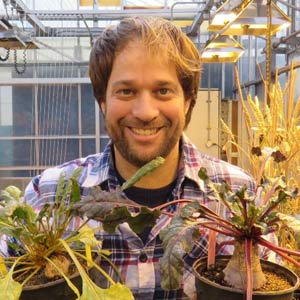
Noam Chayut

John Mutenyo
Partners



Progress, outputs and outcomes
- Method successfully developed to track environmental conditions in seed supply systems.
- Schematic designed for the sensor device based on feedback of industry, government and research stakeholders in the Ugandan seed sector.
- Extensive supply testing planned for the 2021 growing seasons. This is also the case for seed security assessments, seed channel and socio-economic mapping research in rural Uganda.
Funding
- UKRI-BBSRC GCRF-QR funding for Sensing & Managing Seed Stresses in Ugandan Agri Supply Chains.
- UEA Social Science Faculty PhD funding.
Project contact
If you are interested in this project and would like to know more, please contact: m.heaton@uea.ac.uk
